Previously: Kong Kong Kong Ghost.
Type: UL (Unexplained Location).
Period/location of origin: Unknown, Osaka Prefecture, Japan. Subject’s first mention on the internet appeared on Sept. 10, 2010, in which a poster on 2ch recounted an event regarding subject — a mysterious train station known as the “unreadable station” — which had occurred to them on July 28, 2008.
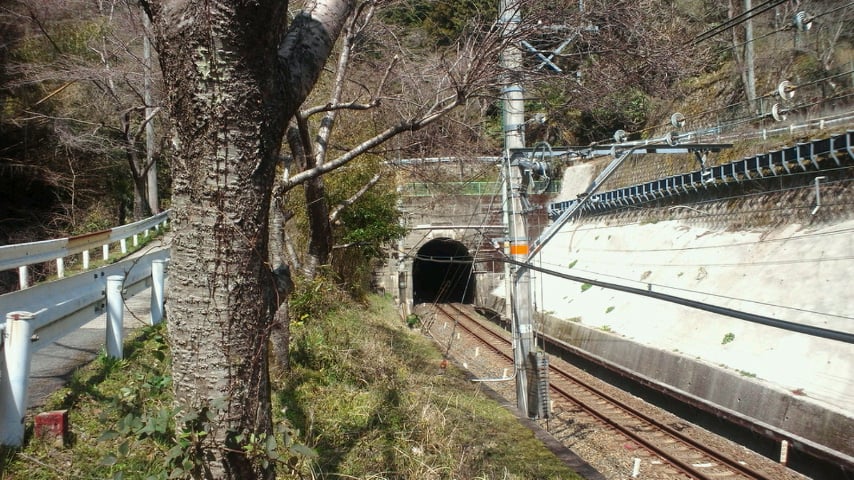
Appearance: Subject, called 読めない駅 (yomenai eki), or the “unreadable station,” appears to be an isolated railway station on the Nankai-Koya railway line somewhere between Kongo and Tengachaya Stations in Osaka Prefecture. Like other similar previous Encyclopaedia subjects Kisaragi and Hitsuka Stations, subject does not appear to have any attendants or staff on duty, nor are there any payphones present. There will be ticket gates, but they will be inoperable; the only way to get through them is to jump over them.
[Like what you read? Check out Dangerous Games To Play In The Dark, available from Chronicle Books now!]
Subject’s most notable characteristic is its name — or, rather, its lack of one. Thereis a sign present identifying subject; however, it is, as subject’s moniker, the “unreadable station,” might suggest, the sign is unreadable. Should it be looked upon, those attempting to read it will register that it is filled with kanji, and that they should, in theory, know the kanji; however, they will be unable to read it. The moment they think they have successfully read it, the words and meaning will slide immediately out of their grasp.
Ergo: 読めない駅. Yomenai eki. The unreadable train station.
Modus operandi: Subject will attract targets attempting to travel on the Nankai-Koya line — the private railway operated by Nankai Electric Railroad that connects Osaka and Wakayama Prefectures via Nankai Namba Station in Osaka City and Gokurakubashi Station in Koya. Particularly attractive targets include those who are easily distracted, or who tend not to pay attention much to the train they are on during their journey — for instance, those who tend to spend their transit time engrossed in their phones or other devices.
Successfully ensnared targets will be alerted to the fact they have, in fact, been ensnared — even if they do not use that particular term for themselves at that time — by the growing realization that their normally busy, noisy, crowded train car is both unusually quiet and empty of other passengers.
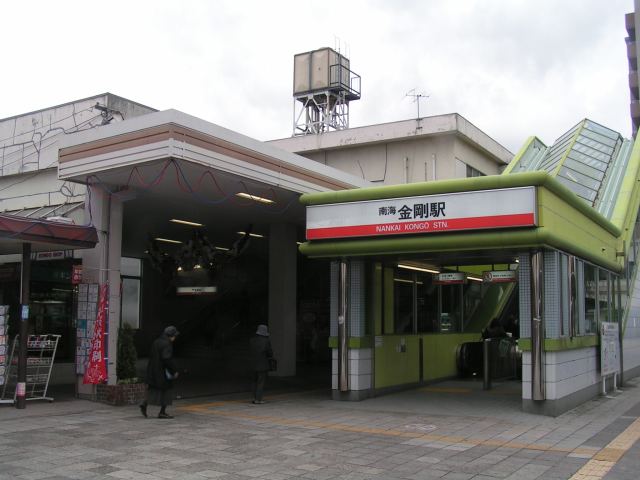
Following this realization, target’s train will soon come to a stop, and the train car’s doors will open. Should targets step out of the train onto the platform, they will find that they have arrived at subject.
They will know this by what they will experience when they attempt to read the station’s sign: They will simply be… unable to do so. They will recognize that there is a sign. They will recognize that there is writing on the sign. They may even recognize the kanji they see on the sign. However, the characters will refuse to resolve into an actual word or phrase — and even in that target does, for a brief moment, seem to be able to read something on the sign, they will find the words and the meaning of whatever they have read simply slipping away within moments.
If they have prior knowledge of subject, target may, at this moment, identify subject as the unreadable station.
If they do not, they will simply remain lost and confused.
Should target then leave the station, they will be able to do so freely; nothing will impede their attempt. However, upon stepping outside the unreadable station, they will find themselves in an area that looks both familiar and not familiar at all. Typically, they will appear to be in an area of downtown Osaka, although not an area with which they are familiar — or, perhaps, not an Osaka with which they are familiar.
Regardless, target will find that any and all spaces — indoors and outdoors both — are also empty of other people. They will still not be able to locate any payphones; additionally, should they attempt to make any calls, send any texts, or otherwise utilize their own mobile phones, they will discover that there is no service to be found.
Target may then return to the station — and, again, they will be able to do so freely; they will simply have to jump over the non-operational ticket gates to make it back to the platform.
At this point, target may then encounter a being who looks like a middle-aged man wearing a bulky overcoat.
This being is not a middle-aged man wearing a bulky overcoat.
Should target attempt to speak to this being, they will find him receptive to conversation; however, although target will have the impression of speaking with him, they will perhaps not be speaking in the traditional sense. The being’s mouth will not move, and now sound will emerge from his lips — and yet, target will still understand that he is speaking to them.
Target may not be able to register or recall full what this being is saying to them. However, the conversation will invariably end with this not-a-man not-wearing-an-overcoat saying:
That is, something like, “I can’t bring you back, so I’ll do it here instead.”
Target will then experience a blinding flash of light — and when their vision clears, they will find themself dropped directly into their everyday life, somewhere, sometime: At work, for instance, in the morning — or perhaps wherever they were heading when they set foot on the train that day.
But from that moment forward, they will notice something… wrong.
They will look in the mirror, and they will not recognize themself. They will not be able to pinpoint exactly what has changed — it is not that they appear older than they should be, nor younger; it is not that their hair has changed, or their eyes; it is nothing that they can point to with certainty — and yet, they will see themself as a stranger.
The same, too, will be true of all of the other people in their lives: They will be… different, somehow.
They will be as strangers.
And it will become clear at that point what has happened:
It is no longer simply the station that is unreadable.
Anyone who has traveled through the unreadable station has become unreadable themselves.
Containment: Unknown. Possible ways to avoid being ensnared by subject include paying strict attention to your surroundings while on the train, not getting off of the train anywhere but your own stop, and simply not riding the train — or not riding this particular line between these particular stops — at all.
But this remains conjecture only. Further research is required.
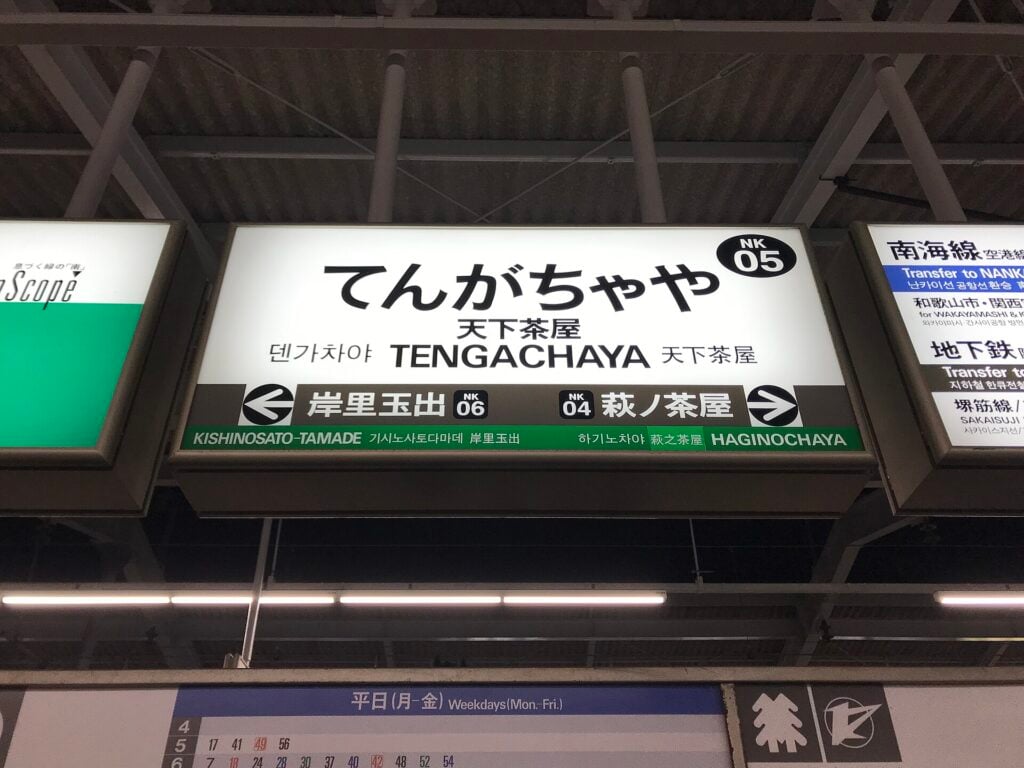
Additional notes: There is only one known report of subject: A post on 2ch (now 5ch) that went live in September of 2010, recounting an incident that occurred two years prior in July of 2008. The writer of this report stated that they were ensnared by subject on July 28 as they traveled between Kongo Station in Osakasayama City — shortened in the post to Sayama — and Tengachaya Station Osaka’s Nishinari Ward. Their experience followed the outline as laid out in the modus operandi section of this Encyclopaedia entry.
Two years later, the writer of this report was still experiencing issues due to the aftermath of their journey through the unreadable station. They remained strange to themself; those around them remained strange; indeed, their entire world remained strange.
They had quit their job and moved back home with their parents — who had also become very different from how they remembered them being.
The world they lived in had become peaceful — joyous, even, and without strife — but it, too, was different from the world they remembered living in before their journey.
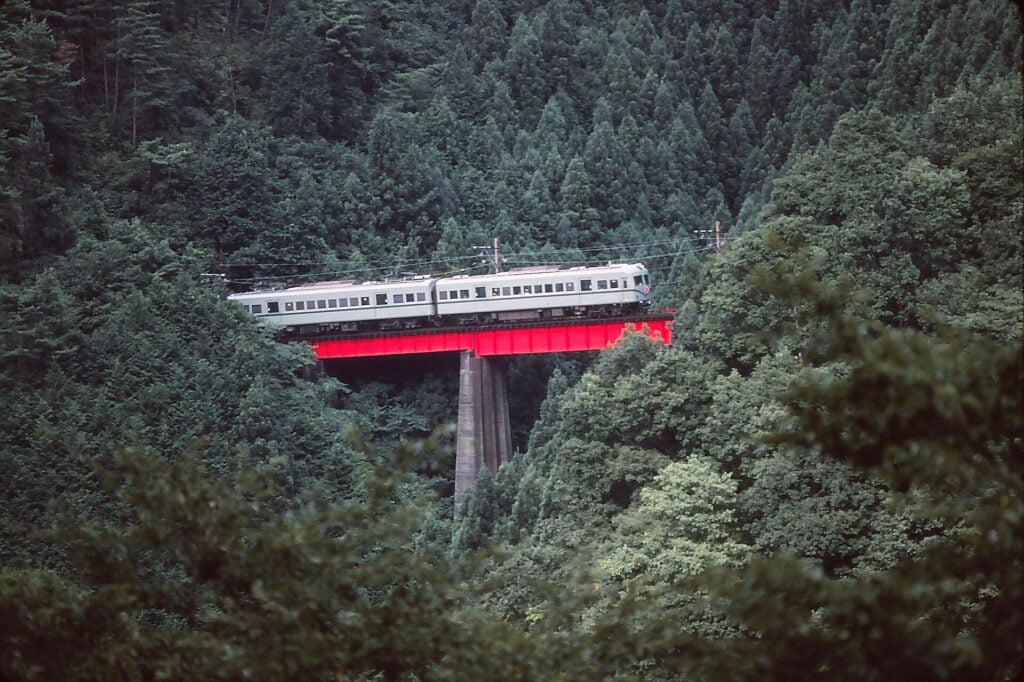
Everything had changed for them — for better or for worse — and there did not at the time appear to be a way to change any of it back.
As far as we know, they are still living an unreadable life in an unreadable world full of unreadable people even now.
Although subject is referred to taxonomically in this Encyclopaedia as an Unknowable Location, or UL, subject may also be known more broadly as an ikai station (異界駅), or “otherworld station.” These are stations that seem to exist outside of time and space as we normally think of it — or simply outside of our standard reality. They are governed by different rules, and may or may not be possible to travel back from once they have been reached.
Other examples of such stations include, though are not limited to, the previously mentioned Kisaragi Station — perhaps the best-known ikai station — and Hitsuka Station.
There exists a theory that all ikai stations are somehow connected, or on a single, otherworldly railway line all their own. This theory is sometimes referred to as the ikai station network theory, and posits that the stops on this ikai railway line are as follows: Tsukinomiya Station → Katasu Station → Kisaragi Station → Yami Station → Gosho Station.
This theory has not been proven one way or the other; it is also not clear where all of the numerous other ikai stations — and there are many — may fall on this line, if indeed they fall on it anywhere in the first place.
It does, however, remain an interesting proposition, and perhaps worthy of further research.
Recommendation: Stay vigilant when riding the train.
You don’t want to end up somewhere you didn’t mean to go.
Resources:
What Is An Ikai Station? A Complete Explanation Of All 15 Stations. (In Japanese.)
List of all known ikai stations. (In Japanese.)
Preserved copy of the original 2ch post featuring the unreadable station. (In Japanese; with dates and timestamps.)
Preserved copy #2. (In Japanese.)
Preservide copy #3. (In Japanese.)
Navitime directions from Kongo Station to Tengachaya Station.
Information about the Nankai-Koya railway line.
Encyclopaedia Of The Impossible: Kisaragi Station.
Encyclopaedia Of The Impossible: Hitsuka Station.
The Scariest Places In The World That Don’t Actually Exist.
***
Follow The Ghost In My Machine on Bluesky @GhostMachine13.bsky.social, Twitter @GhostMachine13, and Facebook @TheGhostInMyMachine. And for more games, don’t forget to check out Dangerous Games To Play In The Dark, available now from Chronicle Books!
[Photos via 0nedream, Ribbon, そらみみ, Olegushka, Gohachiyasu1214/Wikimedia Commons, available under CC BY-SA 3.0, CC BY-SA 4.0, and CC0 1.0 Creative Commons licenses.]


Leave a Reply