Previously: Karsikko Trees.
Scattered across England and the UK are a series of remote paths wending their way through the countryside — paths along which the dead once walked. Not for nothing are they called corpse roads; these are the roads along which the dead traveled between what had once been their homes to the places where they would laid to their final rest.
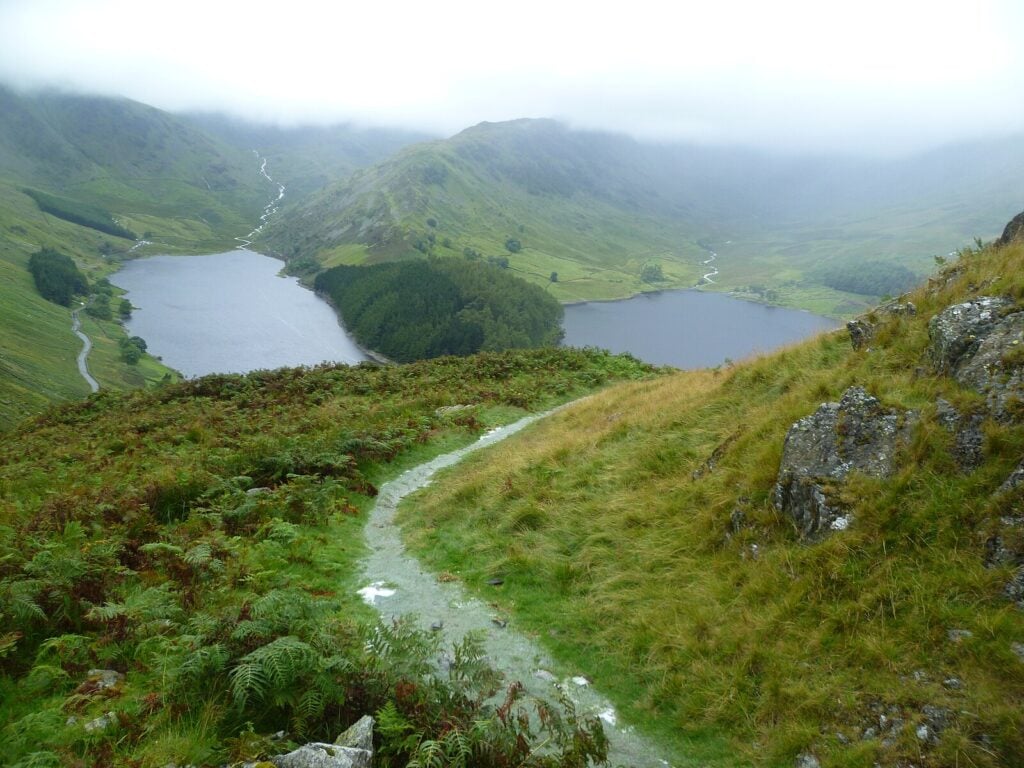
Of course, they didn’t travel along these roads on their own steam; the living were responsible for moving the dead along, carrying them many miles to the churchyards and cemeteries to which they were destined. This responsibility was a practical one — someone had to get people who had died to the parish church, after all. Still, though: As the legend-heavy Wikipedia page for corpse roads drives home, corpse roads have become associated with a huge amount of folklore over the centuries — in part because of their general connection with but, but also, crucially, because of that connection occurring during a particular time in history.
[Like what you read? Check out Dangerous Games To Play In The Dark, available from Chronicle Books now!]
Are corpse roads haunted? Not necessarily — although they might have the reputation of being as such. Are they fascinating all the same? Heck yes. And even better — you can see them even today, often quite easily.
So let’s a take a look, shall we?
Let’s take a journey down the corpse road together.
A Brief History of Corpse Roads
Corpse roads in England — also called coffin roads, funeral roads, lych-ways, and church-ways, among numerous other monikers — arose out of a very specific need. During the Medieval era, tight reigns were kept on which churches were permitted to bury the dead. It was a requirement that anyone who died be interred at the church of the parish to which they belonged; the trouble was, many parishioners lived miles away from the churches that held the rights to their burial. As a result, the remains of those who had passed often needed to be transported a considerable distance before they could be buried. So, paths were forged across the countryside to allow for this transportation — paths which became known as corpse roads.
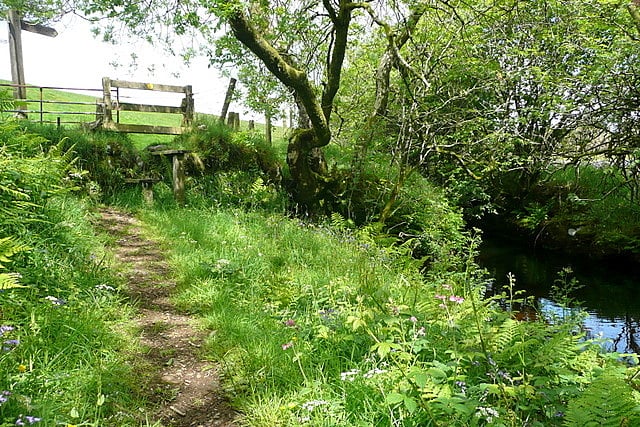
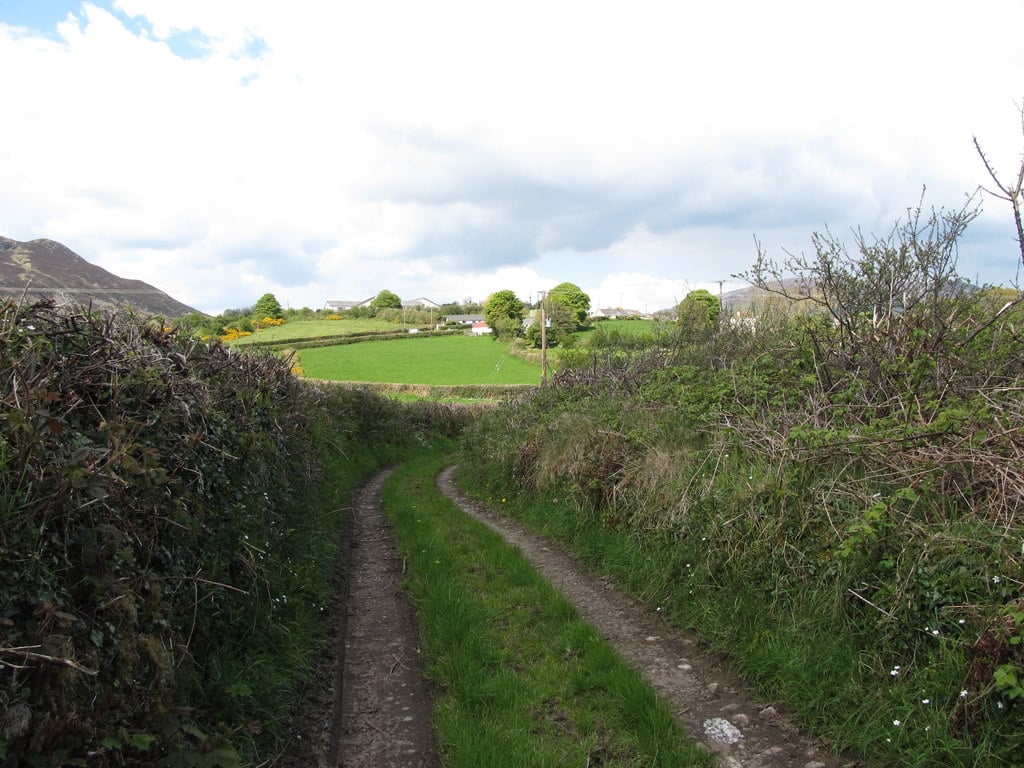
Corpse roads were typically “never ploughed over,” as Edwin and Mona Augusta Radford’s The Encyclopedia of Superstitions puts it, but rather “stood out clearly, hard and dry, and wide enough to allow the bearers to carry the coffin without difficulty.” Allison Meier further notes at Atlas Obscura that many corpse roads were positioned in out-of-the-way locations, “set up on windswept hills and overgrown pastures where no one wanted to go,” so as to keep “rotting bodies [from being] hauled through [people’s] front yards.” Indeed, according to Meier, this remoteness is one of the factors which may have contributed to the survival of some of the remaining corpse roads in England.
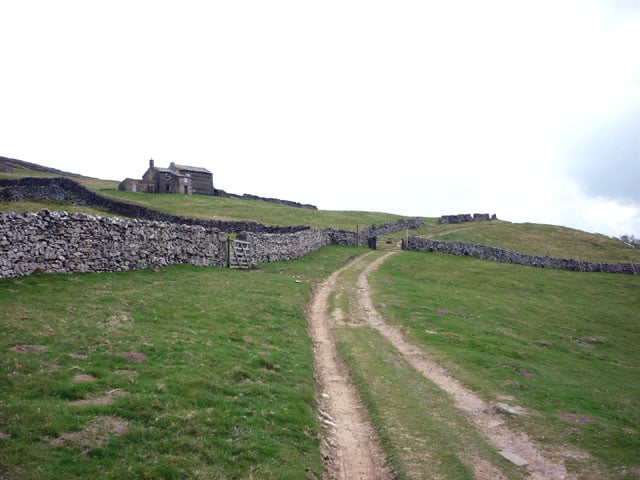
While some corpse roads were just a few miles long, others were quite lengthy. For example, the Lake District path leading from Mardale Green to the church of St. Michael at Shap required — and still does require, should you decide to travel along it, as Sarah Ryan found, writing for Live For The Outdoors — a journey of not quite seven miles, or about 11 kilometers. (Fun fact: Mardale Green no longer exists; it is a drowned village — one that was emptied out, dammed up, and turned into a lake, like what was meant to happen to the village of Celles, France.) Meanwhile, the Swaledale Corpse Way of Yorkshire was 16 miles, or nearly 26 kilometers.
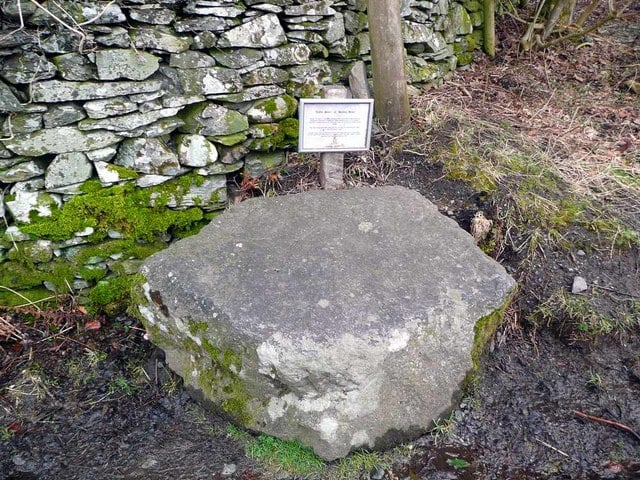
These journeys were usually made on foot; what’s more, according to historian and archaeologist Tom Greeves, who spoke to the Plymouth Herald about corpse roads in 2019, coffins weren’t commonly used in the Medieval era, with bodies instead being “wrapped in a shroud and carried on a wooden [cart].” Some corpse roads, such as one in Dartmoor on Dartmeet Hill, even had “coffin stones” placed beside them on which those transporting the dead could rest their load for a brief time during the journey.
Although corpse roads were heavily utilized in the Medieval period, there’s some evidence to suggest that they may have existed in some form before then, as well. As Legendary Dartmoor points out, the many stone rows — avenues ranging from a few meters to more than three kilometers in length lined with stones typically associated with ring cairns and burial kists — that may be found in Dartmoor may have served a similar function as Medieval corpse roads. Some of these stone rows date back as far as the late Neolithic period — meaning that corpse roads may, in fact, literally be ancient.
The Folklore of Corpse Roads
Given their storied history, it’s unsurprising that corpse roads have long been associated with a wide array of folk beliefs, traditions, and superstitions. Many of these beliefs center around the idea that corpse roads weren’t just used to transport a person’s earthly remains to burial after they had passed, but that they could also be used by the dead to return home if they so desired. For this reason, notes Legendary Dartmoor, many believed that one should never travel down a corpse road after dark — because if you did, you might encounter the spirits of the dead. This belief is also why great pains were taken never to plough over a corpse road; if the route became obstructed in some way while a spirit was traveling over it, the obstruction might prevent them from returning to the cemetery in which their remains lay, thereby dooming them to walk the earth forever.
If you wanted to make sure your deceased loved ones weren’t able to return home, both corpse roads themselves and the way they were traveled could help with that. For one thing, carrying a corpse out of the house feet first would make sure the deceased’s spirit would be unable to recognize the road in the future; carrying a corpse “sunways around a cross three times” would similarly “confuse the spirit as to which way was home,” per Legendary Dartmoor. Furthermore, spirits were believed to have trouble crossing running water and dealing with crossroads; as such, corpse roads might travel over streams or rivers or include a crossroads or two along its route, again to prevent a spirit from traveling back down it after burial.
Other supernatural phenomena were also associated with corpse roads, however. Corpse candles, for example — the glowing orbs of light commonly known as will o’ the wisps — might appear along a corpse road during a deceased person’s journey down it. Corpse candles were sometimes believed to foretell an upcoming death; according to an entry in the Cambrian Register from 1796 via the 1913 volume A Book Of Folk-lore by Sabine Baring-Gould, for example, some believed that “a short space of time before death, a light is seen proceeding from the house, and sometimes, as has been asserted, from the very bed where the sick person lies, pursues its way to the church where he or she is to be interred, precisely in the same track in which afterwards the funeral is to follow.”
(There is, of course, a rational explanation for the appearance of corpse candles; like spook lights or ghost lights, they’re almost certainly the result of burning marsh gas, not the spirits of the dead. They’re spooky-looking all the same, though, so it’s perhaps to be expected that they would continue to capture our imaginations even now.)
Less supernatural was the oddly persistent idea that carrying a corpse over private land established a public right of way over the land in perpetuity. Property owners would go to great lengths to enact procedures believed to secure their rights in the event of a corpse passing over their land — the successive unlocking and re-locking of gates throughout the journey, for example, with the keys accessible only to the land owner — but, as The Encyclopedia of Superstition observes, “the origin of this curious and widespread belief is very uncertain,” as there is “no actual foundation in English law” for it.
Visiting Corpse Roads Today
Although may corpse roads have been lost to time, some still remain; indeed, it’s a popular pastime for many in the areas in which they exist to walk them in part or in whole.
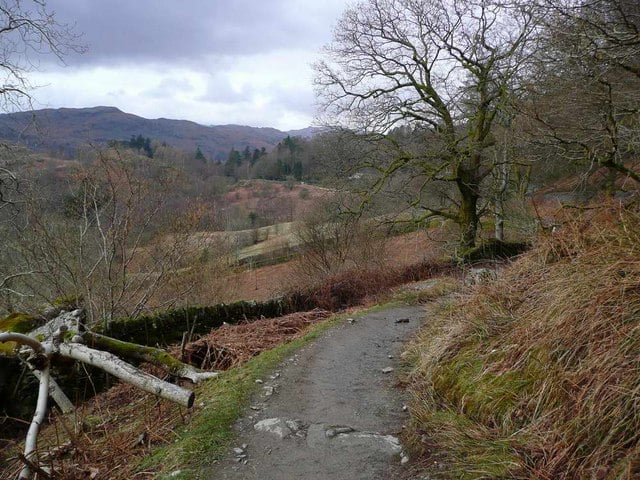
In the Lake District, the corpse road from Ambleside to Grasmere is considered a relatively easy walk; about six and a half kilometers in length, it can be covered in just a few hours. Its views include rolling countryside, burbling brooks, and even a few waterfalls. It is particularly magical at “last light,” per Simon Ingram of the Guardian. At that time, “everything glows pink,” he wrote in February of 2016. “The rock-roughened snow on a far summit. Clouds above it. Lake below. The bones of the trees.”
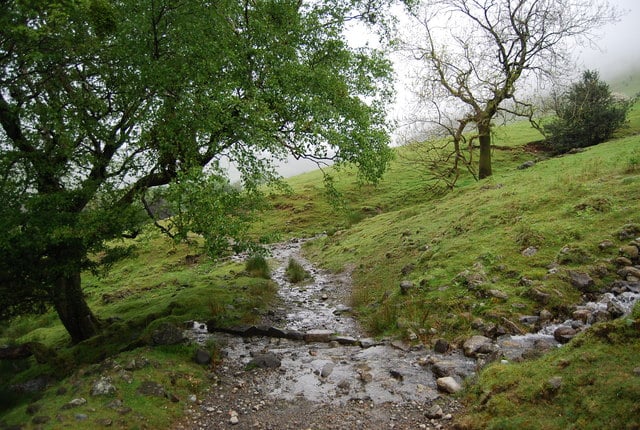
The Old Corpse Road leading from Mardale, also in the Lake District, is a bit longer; according to Nicholas Rudd-Jones and David Stewart writing in the Guardian in 2011, the route is about nine miles, or 14 and a half kilometers. It’s a bit remote, with the valley “deserted at the best of times” and the path “easily lost in the grass and reeds.” Still, though, it remains a brisk walk, enjoyable in its spookiness.
In Cumbria, try the corpse road and tumuli walk in the Buttermere Valley. Per the National Trust, the walk is easy, covering 5.8 kilometers; you can complete it in around two and a half hours. Along the way you’ll pass by “a traditional farm” and “discover evidence of human activity dating from the Bronze Age to the Second World War.”
Corpse roads may no longer be used for their original purpose, but they remain etched into the landscape — literally and figuratively. Just… be careful not to lead any spirits home with you.
Further Reading:
The Encyclopedia Of Superstitions by Edwin and Mona Augusta Radford, edited and revised by Christina Hole. Originally published in 1948 by married duo Edwin and Mona Augusta Radford, The Encyclopedia Of Superstitions was subsequently overhauled and expanded by Christina Hole in 1961. It’s only got a couple of pages on corpse roads — filed under the entry heading “Carrying A Corpse” — but those pages are chock full of information, and provide an excellent jumping-off point for further exploration of the topic. The whole book is exactly what it says on the tin, making it an overall wonderful reference book to have if you’re interested in folklore, superstitions, and other oddities. Happily, the 1961 edition is available to read online via the Internet Archive.
The Radfords, by the by, also wrote a ton of detective novels together — most notably the Doctor Harry Manson series. They’re a little difficult to find these days, but they’re out there if you’re willing to look. Just, y’know, in case that’s your jam.
“Take Your Dead To These Old Corpse Roads” by Allison Meier at Atlas Obscura. The always-excellent Atlas Obscura also provides a short and sweet introduction to the subject of corpse roads. I love Atlas Obscura. Everyone should read Atlas Obscura. No matter what your interests are in the weird, wide world, there is almost certainly an Atlas Obscura piece (or two, or three, or…) for you.
Open Country podcast, episode “Postal Paths And Corpse Roads.” In April of 2024, journalist Helen Mark’s BBC podcast Open Country — focused, as its title might suggest, on both the nature and the people of the British countryside — aired a terrific episode about (again, as the title might suggest) old postal roads and corpse roads in the UK. Interestingly, the two types of roads are not entirely unconnected, as Mark found while reporting this story; in the back end of the episode, she explores part of the corpse road that linked Mardale with Shap.
“Walking In The Shadows: Britain’s Corpse Roads” by Hazel Atkinson at Retrospect Journal. Edinburgh University’s history, classics, and archaeology magazine published this piece on corpse roads in 2021. Again, it’s an overview of the subject — but it’s a more academic one that goes a bit more in depth with the cultural significance of corpse roads. It’s still approachable, though, so if you’re interested in looking more into some of the academic work that’s been done or is still actively being done on corpse roads, this’ll point you in the right direction.
Speaking of…
The writings of Stuart Dunn. Academic Stuart Dunn, who is a professor of spatial humanities at King’s College London, has been doing some really interesting work involving corpse roads for a number of years. (The previously-mentioned Retrospect Journal piece points to some of his findings.) Some of it, he’s documented in informal blog posts at his website; these posts range from general introductions and musings about corpse roads to more specific pieces on particular corpse roads, including documentation of what it’s like to travel them. And, of course, some of it — a lot of it — can be found in academic publications, like his 2020 paper “Folklore In The Landscape: The case Of Corpse Paths,” published in the journal Time And Mind, and his his 2019 book, A History Of Place In The Digital Age. Really interesting stuff; highly recommend.
“Guide To Britain’s Corpse Roads” by Paul Bloomfield at Countryfile. Want to go walk or hike a corpse road yourself? The BBC’s Countryfile magazine has a list of places to start. The walks here are all (relatively) easily visitable, and include options like the Swaledale Corpse Way in Yorkshire and the Coffin Route of the Outer Hebrides. Note, though, that this list is only a starting point — you’ll want to look up the nitty-gritty information about whichever route you decide to hike on a proper trail site like AllTrails before you go, especially if you’re a relative novice to hiking.
“The Path Of The Dead: Walking A Lake District Corpse Road” by Sarah Ryan at Live For The Outdoors. A travelogue of a hike along the Lake District’s most famous corpse road. Detailed and evocative. If you can’t make the hike yourself, this is a good way to do it in an armchair travel situation.
“Take A Walk Along The Old Corpse Roads” by Icy Sedgwick. An introduction to the folklore and superstitions surrounding corpse roads. Icy Sedgwick’s work is super approachable and always an excellent resource. There’s both a printed article here and episode of Sedgwick’s podcast Fabulous Folklore, so you’re covered whether you prefer to read or listen to your weird history and eerie folklore.
“The Corpse Road” by Steve Von Till. As is traditional, some musical accompaniment. Von Till is probably best known for his work with the metal band Neurosis, but he’s an artist with an extremely robust body of work; in addition to Neurosis, he also releases music under his own name and under the name of an alter-ego of sorts, Harvestman. The eerie and atmospheric track “The Corpse Road” is on his 2025 LP Alone In A World Of Wounds.
***
Follow The Ghost In My Machine on Bluesky @GhostMachine13.bsky.social, Twitter @GhostMachine13, and Facebook @TheGhostInMyMachine. And for more games, don’t forget to check out Dangerous Games To Play In The Dark, available now from Chronicle Books!
[Photos via Michael Graham, Graham Horn, Gordon Brown (3, 6), Karl and Ali, Nigel Chadwick, Eric Jones/Wikimedia Commons, available under CC BY-SA 2.0 Creative Commons licenses]


