Previously: Halloween For Misanthropes.
Are you throwing a Halloween party? Yes? Maybe an eerie dinner party, with fun canapés and a themed menu and suspicious punch served out of a cauldron? Well, good news: I have lots of recommendations for you to watch, read, and even in one case play if you’re looking for some Halloween dinner party inspiration. Nothing gets the gears turning like dinner party horror, after all, does it?

I’ve been sitting on this idea for a while now — of doing some kind of taxonomy of what defines dinner party horror (or what defines it for me, at least), or a list of recommendations. This seems like a good time for it, as it’s the time of year when folks are throwing not just parties, but parties with spooky, ooky, seasonally appropriate theming.
[Like what you read? Check out Dangerous Games To Play In The Dark, available from Chronicle Books now!]
So: Let’s get into it, shall we?
Let’s talk about dinner party horror — movies, books, plays, even video games.
What The Heck Is Dinner Party Horror, Anyway?
Dinner party horror can be a lot of things, but for the purposes of this exercise, my criteria for what actually defines it is fairly narrow: It can’t just be a story that features a dinner party scene (so, no Alien; no Rocky Horror Show/Picture Show; etc.), and it can’t just be a story that starts off at a dinner party before veering off somewhere else. It’s got to be a story where the dinner party is central to the action, not just adjacent to it. The dinner party needs to be more than just a device used to get the characters all together in the same place, and it shouldn’t just fade away as the rest of the story gets rolling.
The party in question also has to be a dinner party — not just a house party. So, although I find, for example, Bodies Bodies Bodies interesting for a lot of reasons, the hurricane party at which it’s set isn’t quite what I’m looking for here. The same goes for the many, many literary thrillers that involve a whole bunch of people who used to be friends but who all kind of hate each other now descending upon a private island or a remote ski lodge for a long weekend getaway or destination wedding, only for things to go very wrong, very quickly. Those are fun — I do love a good modern literary thriller — but not quite what I mean by dinner party horror; those, I would argue, are closer to vacation horror.

Why am I keeping the criteria so narrow here? Because dinner parties are governed by very different etiquette rules than house parties or more casual gatherings are — and the clash between what etiquette demands from us and our own sense of self-preservation is often where the real horror in dinner party horror lies.
I Would Rather Die: On Rudeness And A Fate Worse Than Death
Let me elaborate on that a little. (Or, if you want, you can just skip to the list here. I won’t judge. Promise.)
There’s one question that I’m always asking whenever I’m watching, reading, or otherwise experiencing… basically any piece of storytelling: During any given scene, what is keeping these characters in the room together? If something unpleasant is happening, what’s stopping someone from just leaving? Conflict is where story comes from — so, the answer to the question of what’s keeping these people in the room is where the story lies at that point in time.
In horror, a lot of the time, the answer to that question is that the characters are physically barred or prevented from leaving — the door is locked, or they’ve been bound or contained, or they’re too injured to be able to move easily enough to leave, that kind of thing. But in dinner party horror, they’re often — not always, but often — physically free to leave whenever they want. It’s frequently the social contract that keeps them in place: Even when every muscle in their bodies might be screaming at them that the situation they’re in is unsafe, that they should leave, that they should really just get the hell out of there right now… they can’t.
Why? Because it would be rude.
It’s rude to leave a dinner party early. It’s rude to leave without informing your host you’re leaving. When someone has extended their hospitality to you — when they’ve opened the doors of their home to you, when they’ve invited you to sit at their dinner table with them and share a meal — it’s often seen as rude to reject it. And the characters in these kinds of stories? They absolutely do not want to be seen as rude. For them, to gain a reputation for being rude is literally a fate worse than death.
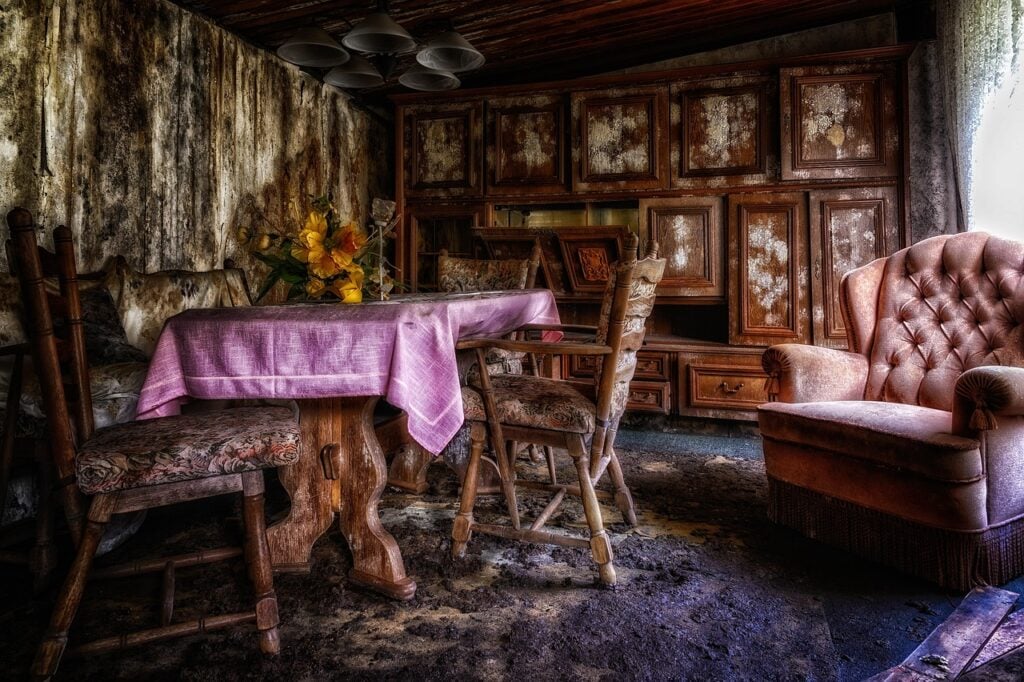
And that, ultimately — the relentless need to obey etiquette, to follow the social contract, to not rock the boat which has been drilled into all of us from a very early age — that’s what does them all in.
Societal expectations are the villain here. They might be demonstrated through the lens of someone or something else, of course — but that’s the actual monster: The heavy, heavy weight of the typically arbitrary expectations and constrictions put upon us by “polite society.”
All of which is to say: It’s almost Halloween. Parties are a big part of many Halloween celebrations. So if you’re looking for some horrific dinner party stories to go along with your own party — or if you’re looking for a reason not to throw a party — here are a bunch, spread across a wide range of media.
Don’t forget to RSVP.
It would be rude not to.
Guess Who’s Coming To Dinner? Dinner Party Horror Picks For The Discerning Fan
1. The Invitation (2015)
Starting off with the heaviest of hitters: Karyn Kusama’s The Invitation, which is probably my favorite dinner party horror film, full stop. It’s lived rent-free in my brain for almost a full decade at this point; indeed, it’s largely the inspiration for this whole piece.
Will (Logan Marshall Green) and Kira (Emayatzy Corinealdi) drive to the Hollywood Hills home of Will’s ex-wife, Eden (Tammy Blanchard), and her new husband, David (Michiel Huisman), for a dinner party; Eden and Will had divorced several years earlier following the death of their young son. The party’s guests also include many of Will’s and Eden’s friends from their days as a couple with whom they’d lost touch, along with two newcomers, Sadie (Lindsay Burdge) and Pruitt (John Carroll Lynch). As the party goes on, however, it becomes clear that Eden and David have more in mind for the evening than just reconnecting with old friends, and, well… that’s where I’ll leave off. Spoilers, you know. You’ll have to watch it to find out what, exactly, is going on at this strange and terrible gathering.
The Invitation truly exemplifies the most interesting aspects of dinner party horror: It is so clear how uncomfortable all of the guests are, but they are so afraid of being perceived as rude that they just kind of… keep rolling with it, until it’s too late.
Of course, it does eventually become apparent that there are some other things that might prevent them from leaving beyond the unrelenting need to observe the social contract — but most of them are already so bound by their desire to be seen as polite and good guests that they don’t even find out about most of them.
It’s great. If you haven’t seen it yet, remedy that as soon as you can. A-plus, all round.
Watch it on Tubi.


2. Gwleðð, or The Feast (2021)
The Welsh-language film Gwleðð, or The Feast in English, was a new one for me when I watched it last year; I had heard about it from the home invasion season of the (terrific!) podcast Evolution Of Horror, and it turned out to be one of my favorite viewings of the year.
Here’s how I summed it up last Halloween:
“A wealthy family (Nia Roberts, Julian Lewis Jones, Steffan Cennydd, and Sion Alun Davies) in the Welsh mountains prepares for a dinner party meant to woo a business investor (Rhodri Meilir) and to convince a local farmer (Lisa Palfrey) to allow them to drill on her land. The land, however, has other ideas, and the young woman (Annes Elwy) from a nearby village the family has employed to help with the dinner party may not be what she seems.”
It sits pretty firmly in the modern folk horror canon, but it also works within a bunch of different genres — including home invasion, as it was positioned for Evolution Of Horror, and dinner party horror, as I’m putting it here. It’s a quiet, slow burn of a film, but well worth your time.
Watch it here.
3. “The Family In The Adit” by A.T. Greenblatt
This short story, which was originally published in the April 2021 issue of Nightmare Magazine, is a bit of a change of pace: It shows us what happens when something is given the structure and appearance of a dinner party, but is actually something else.
It’s a negotiation — one with the highest possible stakes.
In the world of this story, there is a Mine. Those who come to it do so hoping for the eureka moment — for gold, or gems, or any of the other riches one might find within the earth. But the Mine goes deep — deeper than those who journey to it know, until it’s too late. Until there is no way out.
But there is also a Family — the Family in the Adit, right at the border between the Mine and the surface. The Family is governed by a cruel patriarch, with a subservient Wife and Children stuck under his violent thumb. Those who come to the Mine and want to leave — to find a way out — must have dinner with the Family in the Adit.
It is a requirement.
It is necessary.
It is the only possible way out — but few make it.
This is the story of one who tries.
And it’s a cracking good ‘un.
Read it at Nightmare Magazine.

4. The Menu (2022)
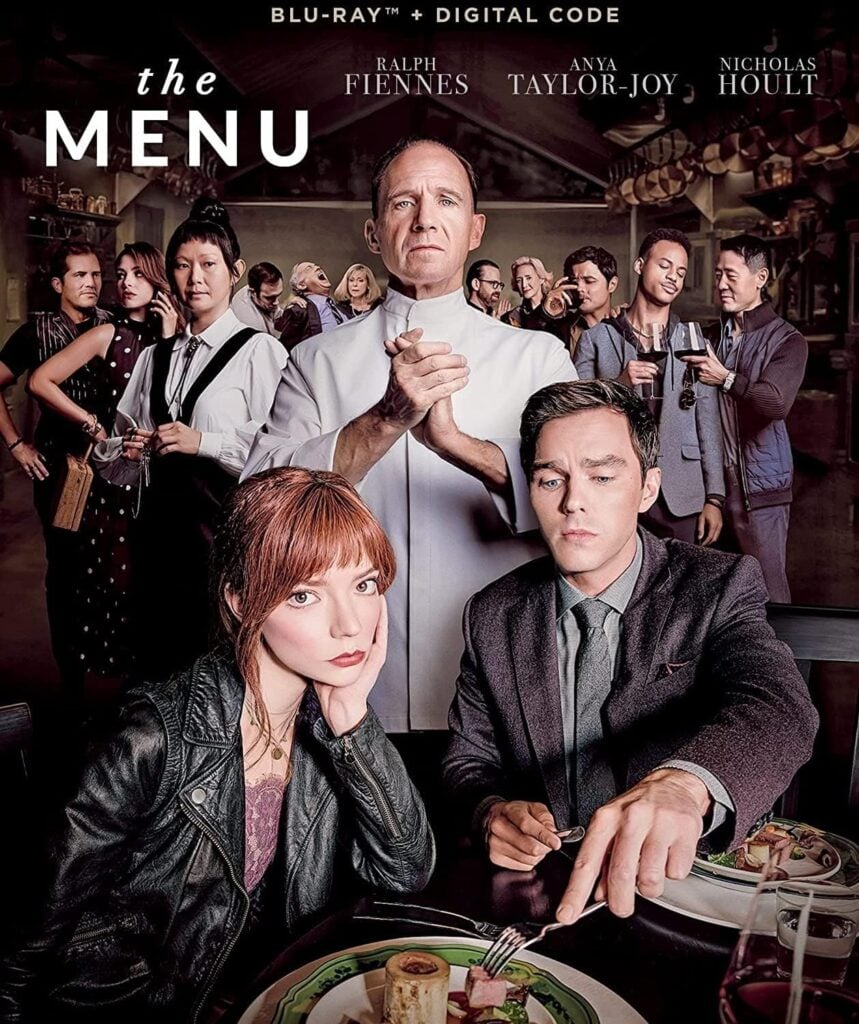
The Menu was on my Halloween recommendations list last year, but boy, do I stand by it; as I said then, I had a wild time watching it.
A group of wealthy diners, among them Tyler (Nicholas Hoult) and Margot (Anya Taylor-Joy) travel by boat to a secluded island to experience a meal at Hawthorn, an extremely exclusive — and extremely expensive — restaurant headed up by the revered but eccentric chef Julian Slowik (Ralph Fiennes). Chaos ensues.
This is putting it very mildly, but I do truly think that, assuming content warnings aren’t an issue for you, going into this one knowing as little about it as possible is the way to go. (That said, though, it does require content warnings for just about anything you can think of, so if that’s a thing that influences what media you choose to engage with, you’ll want to look ‘em up for this one.)
Arguably, The Menu isn’t quite dinner party horror; it’s fine dining horror. But fine dining horror feels adjacent enough for it to count here, largely because a fine dining experience like the one seen in this film has a lot of weird etiquette stuff attached to it that… goes a little beyond the general “how to be a good customer” rules that usually dictate the protocol for a restaurant meal. And while there are some physical constraints keeping everyone in the room here (the fact that they’re on an island that’s only accessible by boat, for example), making them a bit of a captive audience, so much of what governs their behavior is about satisfying Slowik’s ego — and the way they do it is with etiquette.
That’s one of Slowik’s big beefs, it turns out — he’s not enamored of how people behave at his restaurants these days. They don’t appreciate what he does — even though one could argue that paying the exorbitant cost of the meal should be appreciation enough.
Again: I had a wild time watching this one. If you missed it, give it a try — especially if you also managed to miss all the discourse surrounding it when it was first released. It is a ride.
Watch it here.
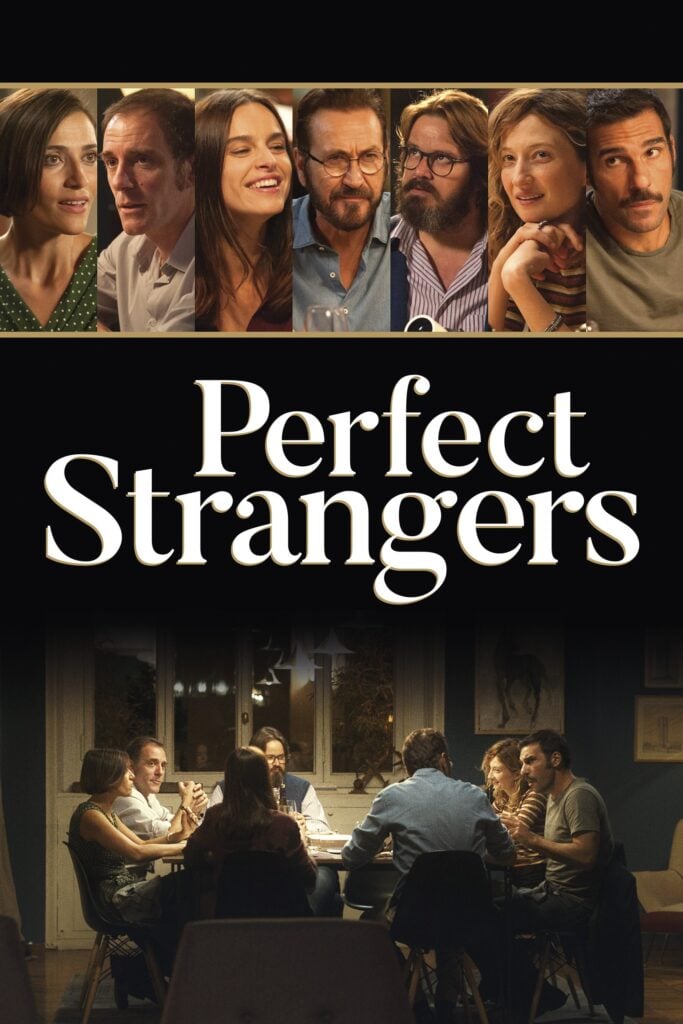
5. Perfetti Sconosciuti, or Perfect Strangers (2016)
This Italian film is perhaps more of a dark dramedy than a horror film; then again, if hell is other people, then perhaps it still fits here.
A group of friends gather for an eclipse-viewing dinner party. Over the meal, one of them — a couples’ therapist — states that she suspects many couples would break up if they knew the contents of each other’s phones. A game is proposed: Each of them will reveal these contents—the messages, the voicemails, the call logs — to see if this assertion is true.
You can… probably guess how well that goes.
The thing to watch here, though, is how each of these seven people responds to the revelations brought up by their increasingly troubling message histories — and boy, does this one have an ending that’ll stick with you.
There is no horror like the horror of just… people being people.
Watch it here.
6. Het Diner, or The Dinner by Herman Koch
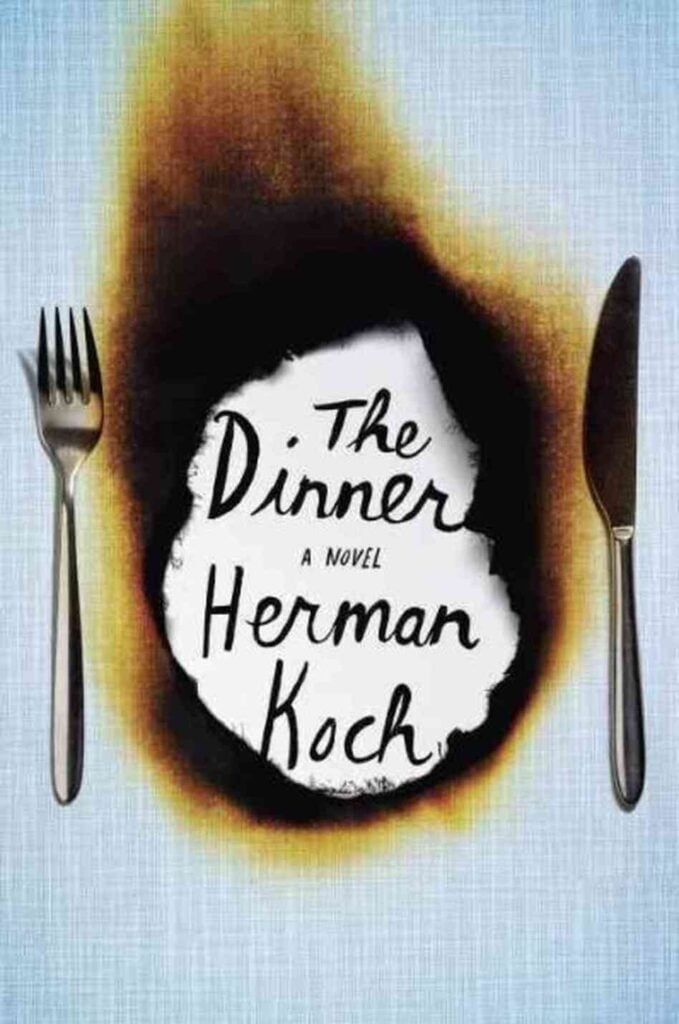
We change environment slightly in this novel; we’re at an upscale restaurant instead of someone’s home, as in The Menu, although the point here isn’t the restaurant itself, but the whole idea of having a discussion over a meal — a fraught one. One that, honestly, it would be a bold choice to have in a public space like this.
Paul and Claire Lohman meet with Paul’s brother, Serge, and his wife Babette at an upscale restaurant in Amsterdam to have dinner and discuss their children. Paul is a former history teacher; Serge is a politician. Each has a teenage son. And those sons, it turns out, have… done something. Something that was caught on camera, though the people involved have not yet been identified. Something that would ruin the family — especially Serge’s political career — if it were ever traced back to them.
What are the parents to do?
What lengths would they go to in order to protect their sons and themselves — even if that is, unequivocally, the wrong thing to do?
That’s what they’re there to hash out — but, naturally, the evening doesn’t exactly go as planned.
The Dinner has been adapted to the screen several times in a number of different languages, but to be perfectly honest, I don’t think any of them work as well as the original novel does. It finds its structure in the many courses of the dinner itself, which is a fun choice. And, again: Bold to talk about something like this at a restaurant, and not, y’know, at someone’s home.
I read this one in translation; it’s originally Dutch. The English translation is by Sam Garrett.
Get it at Bookshop.org.
7. Kadaver, or Cadaver (2020)
Cadaver is a little bit of a variation on a theme: We’re dealing not just with dinner party etiquette, but with dinner theatre etiquette.
In the not-terribly-distant future, the people of an unnamed Norwegian city that has been leveled by a nuclear disaster are starving. There is, however, one respite — assuming you can get a ticket: An immersive theatre production performed at an old hotel that begins with a sumptuous meal for the audience.
Leonora (Gitte Witt) manages to get a hold of tickets for herself, her partner Jacob (Thomas Gullestad), and their young child, Alice (Tuva Olivia Remman) — but after the meal, as they wander the hotel and its strange performance, it soon becomes clear that all is not well inside these walls.
Are you familiar with the “yes, and” principle? It’s an essential rule for improv comedy. The idea is that whatever your scene partner gives you, you never reject the premise — that is, you never say “no” to it — but instead say “yes, and”: You accept the premise, and then you add to it to keep the scene building.
But improv comedy isn’t the only situation which benefits from “yes, and”; immersive theatre experiences that involve the audience not just as viewers, but as participants, can also only thrive if those audience members say “yes, and” to everything they see or experience. (Think Sleep No More, if you’re familiar.)
That’s a lot of what makes Cadaver tick — and although “yes, and” isn’t usually dangerous, in this case, it is.
It really, really is.
Watch it on Netflix.


8. Rope
Admittedly, Rope might better be classified as a thriller than as horror — but the line between the two is often quite blurred, so forgive me if I smudge it a little more in this instance. Besides, the fun thing here is that we’ve got a twofer: Rope, the 1957 Alfred Hitchcock film, and Rope, the 1929 stage play by Patrick Hamilton (who, by the by, also wrote the original Gas Light — the 1938 play that would later be adapted into film as Gaslight in both 1940 and 1944).
The setup for both is the same, although Rope the film deviates a bit from its source material. In both, though, we witnessed two young men violently dispatch one of their former classmates and hide his remains in a large trunk. They then hold a dinner party, with the trunk used as a buffet — its contents unknown to the guests. Their goal? An intellectual exercise, of sorts; utilizing rhetoric they learned at school, they hope to get away with committing the perfect crime. Suspicion mounts as the party goes on, and, as is often the case with dinner party disaster stories: Chaos ensues.
If you’re familiar with Rope, I’d be willing to bet it’s in the form of the Hitchcock film; the play isn’t often produced, although you can still get a hold of the script fairly easily. Rope the film also had such a notoriously difficult production that it’s almost better known for the unusually complicated nature of its filming process than it is for the finished film. (Hitchcock’s gonna Hitchcock.)
But despite all that, both are worth checking out; they’re masterful in their building of suspense, and the dramatic irony of the audience knowing what’s in the box trunk while the guests at the dinner party don’t creates marvelous tension.
Watch Rope (1957) here, and read Rope (1929) here.
9. Mr. Kolpert by David Gieselmann
This one is an… acquired taste.
A stage play that had its English translation premiere at the Royal Court Theatre in London — known for championing the works of challenging and controversial playwrights like Sarah Kane and Mark Ravenhill; it also played to host to the premier of The Rocky Horror Show in 1973 — Mr. Kolpert takes lot of its cues from Rope, with a dash of the mind games that take center stage in Edward Albee’s Who’s Afraid Of Virginia Woolf?; it is, however… much less genteel.
Bastian and Edith, an aggressively normal couple, have been invited to have dinner at the home of Sarah and Ralf, an aggressively unusual couple. Sarah and Ralf’s home is minimalist and all-white — except for the large, ornate trunk in the middle of the room in which they have chosen to entertain their guests.
Inside that trunk, they tell Bastian and Edith, lie the remains of Sarah and Edith’s coworker, Mr. Kolpert.
Or do they?
I stage managed a production of Mr. Kolpert in New York years and years ago; it’s among the, uh, messier shows I’ve worked on, so if various bodily fluids and excretions are… not something you do well with, consider yourself warned. (Ask me about the time my now-spouse, then-boyfriend texted me while I was working out the practical FX for one of the show’s grosser scenes and my response was something like, “Hang on, I’m covered in vomit.” Also, fun fact: Instant oatmeal makes great fake vomit!)
Get it at Amazon.

10. The Perfect Host (2010)
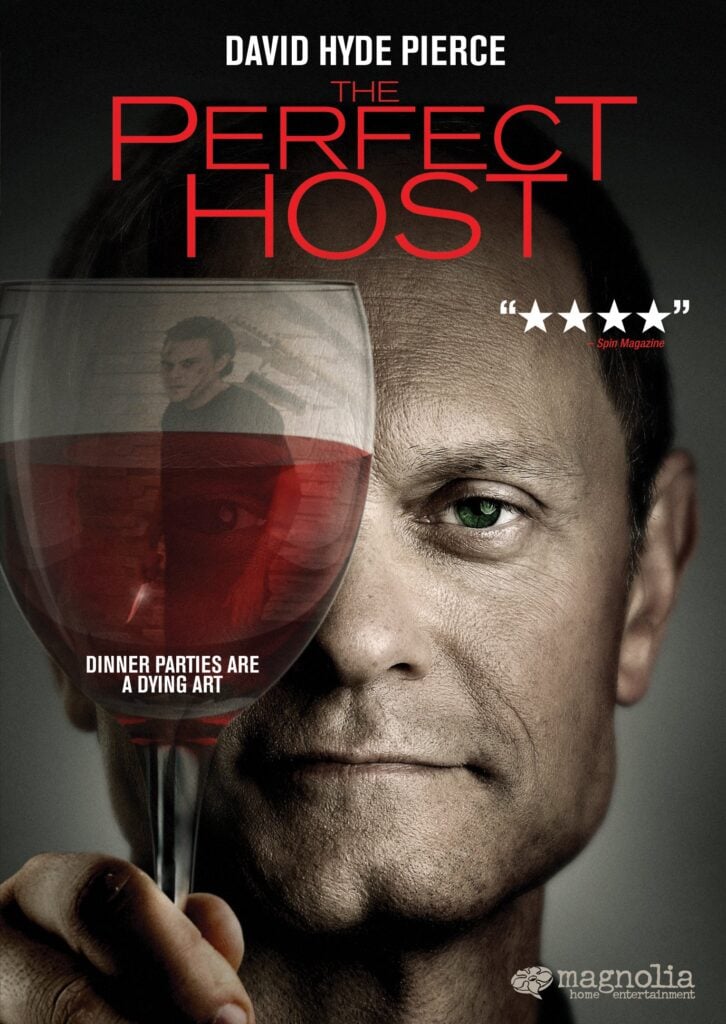
Have you ever crashed a dinner party? I… have not, and probably wouldn’t make the choice to do so, because, well, etiquette. But then again, etiquette is largely what we’re talking about when it comes to dinner party horror, isn’t it? So, then: Here’s the price of crashing a dinner party — particularly when you don’t actually know the host at all.
John Taylor (Clayne Crawford) has just committed a crime, and now he’s on the run. He’s injured. He needs somewhere safe to go and hide out until the fuss dies down. So, he sneaks his way into someone’s home — in this case, the home of Warwick Wilson (David Hyde Pierce). Wilson is preparing to throw a dinner party, and wouldn’t you know it? He’s happy to have Taylor join, even though they just met.
This, however, turns out not to be good news for Taylor.
Not good news at all.
The dinner party is central to this one, although perhaps not in the way you might expect. It’s a flawed film with some pacing issues, but David Hyde Pierce is sublime.
Don’t crash parties, y’all.
Watch it here.
11. An Inspector Calls by J. B. Priestley
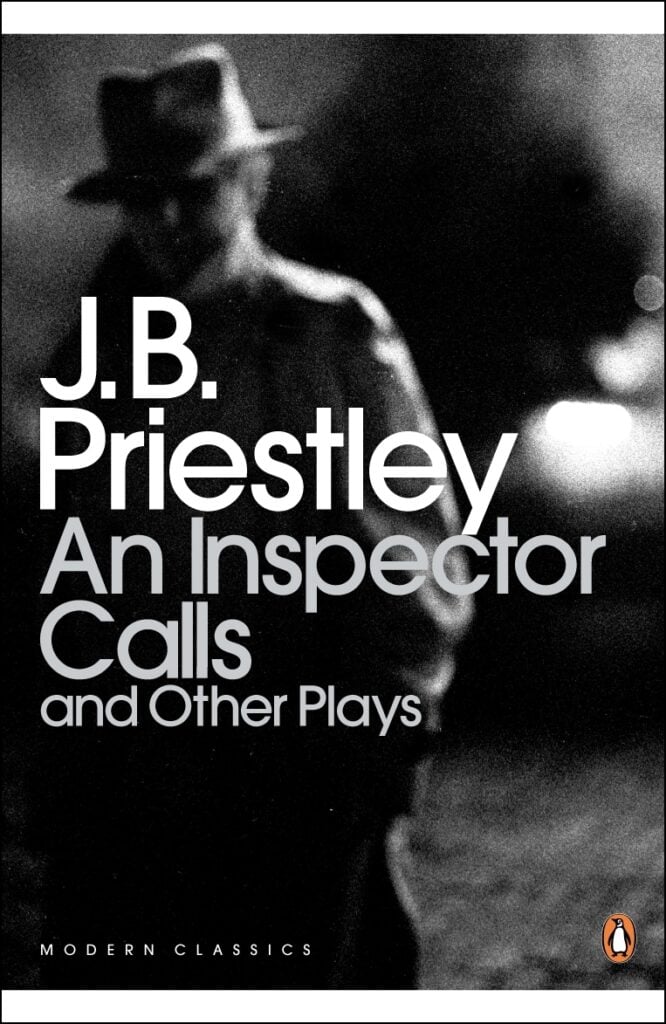
An Inspector Calls is perhaps not horror — it’s a mystery more than anything else — but it’s the kind of story that really would have been at home in, say, The Twilight Zone, so I’ll do the slightly unorthodox thing of including it here.
A stage play, it takes place over a single night in the aftermath of the First World War as the wealthy Birling family — matriarch Sybil, patriarch Arthur, their adult children Sheila and Eric, and Sheila’s fiancé, Gerald Croft gather to celebrate Sheila and Gerald’s engagement over dinner. The evening is interrupted by the arrival of Inspector Goole, who informs the family that he is investigating the death of a young working class woman, Eva Smith. Although they all initially deny knowing Eva Smith, it becomes clear over the course of the evening that each of them had something to do with her death…
…Or did they?
An indictment on the British class structure as well as a phenomenally-plotted thriller, this 1944 play absolutely holds up even now, more than 80 years later.
I was lucky enough to see the much-lauded Stephen Daldry production of An Inspector Calls when I was quite young — maybe around nine years old, if memory serves — and it ended up being a formative experience for me. The play later ended up being the first play I ever directed, and I’ve continued to be fortunate enough to have been able to revisit the Daldry production several times as an adult. It’s a terrific piece of stagecraft — one of those seemingly rare times where the big, expensive set really does serve the story.
But! There are lots of other ways to engage with this particular story, if you don’t happen to be in the right place at the right time to see a production of it; it’s readily available to read in print, and there are a number of screen adaptations of it. Perhaps most notable is the 2015 version starring David Thewlis as Inspector Goole; additionally, Miranda Richardson and Ken Stott play the Birling family matriarch and patriarch here, and a many-years-pre-Andor Kyle Soller appears as Gerald Croft.
Get the script at Amazon and watch the 2015 film here.

12. Discussion Over Dinner
Video games are perhaps a little different when it comes to the “what’s keeping them in the room” question; in this case, “them” is actually you, the player, and the design of the game is what’s keeping you in the room. You could make the argument that you, the player, deciding to play this game in the first place is making the choice to enter and stay in the room, though how useful a super meta argument like that might be is up to you.
In any event, Discussion Over Dinner is a short game that’s free to play on Steam in which you attempt to make your way through an increasingly awkward dinner with your new neighbor, Theo. The key is not annoying Theo, because, uh… well…
…Best not find out.
Developed by solo dev Eli Stevens, it’s an unsettling little exercise in the discomfort of making small talk with someone you don’t know. If the other person is being weird, you can’t call it out; to do so with someone you don’t know very well is, oddly enough, considered rude, despite the fact that the other person’s boundary-pushing behavior is the thing that’s actually rude.
The art style is effectively grotesque; the mechanics are simple, yet anxiety-inducing; and overall, it’s a fun little bite-sized game that lets you experience what it actually feels like to be in a dinner party horror story — not just watch one.
Play it on Steam.
Honorable Mentions
I discounted the following picks from my main list due to the fact that a dinner party isn’t central to the action in them: Either the dinner party starts off as the setting, but isn’t really contributing to keeping everyone in the room together once the story really gets going, or the party in question isn’t quite a dinner party in the first place.
That said, though, they’re worth checking out, especially if you’re more interested in the idea of a party as a setting or starting off point than in the etiquette element of it that I’ve focused on above.
- Bodies Bodies Bodies (2022). This one seemed to be surprisingly controversial when it came out. Personally, I found it to be an interesting take on the party slasher: It does the thing and subverts the thing at the same time, and the result is that it ultimately ends up not being a whodunnit, as many slashers are, but rather about the psychology of what’s going on between all of the partygoers as they try to figure out what’s happening to them (they’re all so very wrong) and how to cope with it (badly).
- It’s What’s Inside (2024). Sci-fi body switching horror. I really enjoyed this one; the weekend-long bachelor party setup just isn’t quite what I was looking for here. This one is also one of many instances where the party gets everyone together, but ultimately isn’t what’s keeping them together.
- Coherence (2013). Again, the party gets everyone together, but doesn’t keep them together. Both this one and the one below it here have the same answer to “what’s keeping you in the room” (or at the party, as the case may be), and that’s “some sort of apocalypse (we think), literally can’t leave.” That said, though, this sci-fi story about a group of people who gather for dinner as a comet passes overhead is well-liked among dinner party horror afficionados, so it’s worth a watch.
- Await Further Instructions (2018). As previously noted, the party — a family holiday gathering — brings these people together, but what keeps them together is the fact that they literally cannot leave the house. Warning that this one is full of people I absolutely hated — just a full cast of the most remarkably unlikeable characters. That doesn’t necessarily say anything about whether the film is good or not; I don’t need to like a character for their story to be interesting. But if you find it difficult to stick with stories in which pretty much every single character is guaranteed to, at the very least, annoy you, if not outright repel you, this one may not be for you.
- You’re Next (2011). A wealthy family full of people you will probably hate gathers for a dinner party; then it turns into a home invasion survival story as masked killers start picking them off one by one. I’ll be perfectly honest: I am not nearly as enamored of You’re Next as a lot of folks seem to be — I think there are other films out there now that do what it does better — but, as always, just because something is Not Quite For Me isn’t necessarily a memorandum on its relative merits as a piece of storytelling, or on its general enjoyability as a viewing experience, and so on. It did walk so all those other films I think do the same better could run, and that’s not nothin’.
- Here Comes Hell (2019). This one is more a “weekend in the country” situation than a dinner party one, hence its exclusion from the main list. Think Evil Dead by way of pre-Code cinema — it’s a wonderful pastiche of 1930s film conventions, with a wacky “Oh no, we tried a séance as a lark and now there’s something supernatural and disgusting after us” plot. This movie is a goddamn delight. I had a great time watching it.
- Barbarians (2021). Again, kind of a “weekend getaway” situation, rather than a dinner party one. A bunch of friends gather at an expensive holiday property, their bonds are tested as they realize they’ve all stabbed each other in the back in one or another, and then also there are masked assailants trying to kill them all. A nice, taut thriller, and it’s always nice to see Iwan Rheon onscreen.
- Ready Or Not (2019). Not quite a party — more like the aftermath of a party — and the party in question isn’t a dinner party. (Weddings are, I would argue, very different from dinner parties, even though they often involve dinner.) But it has the same kind of feel as a dinner party horror story, in a lot of ways. I love this movie so much. It was such a delightful surprise when I saw it in cinemas, and it has continued to hit every single time I’ve watched it at home since.
- Clue (1985). Not horror, but a wonderful dinner party whodunnit. I have adored this film since I was a very small child. It is, as far as I am concerned, a perfect movie. I will not be taking questions at this time.
So: There you have it. I hope that’s enough to inspire you. Or to warn you off. However you feel about dinner parties. Happy Halloween, friends. Stay safe out there.
Bon appétit.
***
Follow The Ghost In My Machine on Bluesky @GhostMachine13.bsky.social, Twitter @GhostMachine13, and Facebook @TheGhostInMyMachine. And for more games, don’t forget to check out Dangerous Games To Play In The Dark, available now from Chronicle Books!
[Photos via GerritHorstman, Antonio_Cansino, Tama66/Pixabay; Teojoedits/Wikimedia Commons, available under a CC BY-SA 4.0 Creative Commons license; Eli Stevens]
