Previously: The Haunted Bookshop, Cambridge, UK.
In the Czech Republic, not quite 50 kilometers north of Prague, there’s a castle. To be fair, there are quite a few castles in the Czech Republic; this one, though? It’s… unusual — and for more than a few reasons, at that. Houska Castle, as it’s called — Hrad Houska, in the original Czech — has some odd architectural details; it’s also not in a particularly notable location. But most importantly, it doesn’t seem to have been built originally to house any people at all.
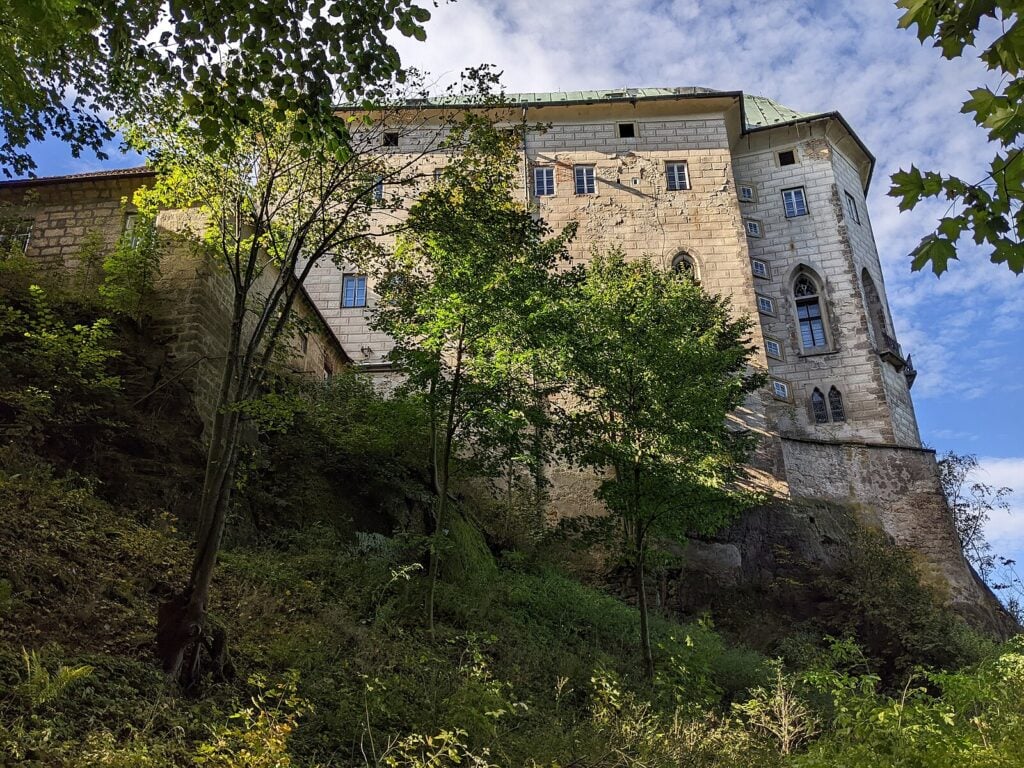
Houska Castle, you see, might have been built for an entirely different purpose than habitation.
[Like what you read? Check out Dangerous Games To Play In The Dark, available from Chronicle Books now!]
Because beneath the castle, it’s said that there’s something… evil.
A gateway, of sorts.
A Gateway to Hell.
And Houska Castle’s job? It’s to keep the Gateway to Hell shut and locked tight.
Or at least, that’s what the stories say. As always, there may or may not be much truth to them — but boy, are they pervasive.
So let’s take a little trip, shall we? Let’s hop on over to Houska Castle.
It’s sure to be a devil of a time.
A Brief History Of Houska Castle
We don’t know exactly when Houska Castle was first built, but the oldest written record we have of it dates back to 1291. It’s generally believed to have been commissioned by Ottokar II of Bohemia, also known as the Iron and Gold King, whose reign lasted from 1253 until his death in battle in 1278. For a castle, it’s quite small — which makes sense, given what we know about its intended purpose: It wasn’t meant to be a stronghold or seat of power, but rather an administrative building used as a central management location for the rest of the royal estates.
This is further evinced by the fact that it lacked any of the necessaries that would be required for it to be a place of residence. It had no kitchen, and it did not have a reliable source of water — only a cistern which collected rainwater. Nor was it well-positioned; it wasn’t near any trade routes or areas of strategic importance. It was, more or less, in the middle of nowhere.
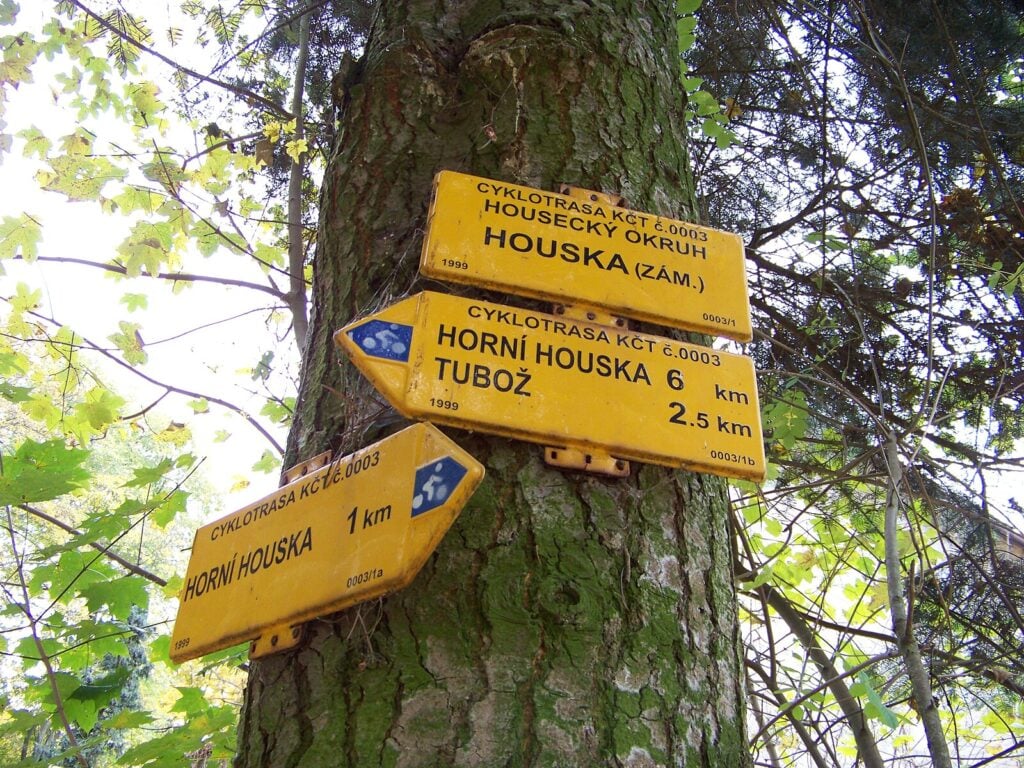
Sometime after Ottokar II’s reign, Houska Castle was acquired by the Berka of Dubé — in the original Czech, the Berkové z Dubé — a cadet branch of the Bohemian noble family the Lords of Dubá.
A cadet branch is the line of (male, typically) descendants of the younger sons of a monarch or patriarch. You’re probably familiar with widely-spread practice, especially historically, of the eldest son of a family line inheriting the bulk of family’s wealth and power, including titles and land; the younger sons would typically receive far less. These younger sons were, in some areas of Europe and Asia, known as cadets.
So: When Houska Castle passed to the Berka of Dubé, it passed to the descendants of the younger sons of the Lords of Dubá.
The castle proceeded to change hands fairly frequently after that, going to Jan Smiřický around 1432, and then to the Hrzán noble family in 1502. At this point, the castle, which was originally constructed in the Gothic style, underwent some renovations, putting it more in the Renaissance style and therefore classifying it as a chateau; it also became usable as a residence.
Further owners and residents included, throughout the 17th century, members of the Wallenstein noble family; the Swedish army; who occupied the castle for a period in the 1630s during the Thirty Years’ War; Jan Böck, who was gifted it in payment of a debt by Emperor Ferdinand II; Veronika von Sulz and Hypolita Franziska von Hofkirchen, who had been included in the agreement gifting Houska Castle to Böck and to whom Böck later sold his part of the claim; and their descendants.
In 1700, it was sold to Jan Vilém, Count of Kounice, whose family maintained possession of the castle for close to two centuries. Between its initial acquisition at this time and the early 19th century, it fell into substantial disrepair; beginning in 1823, however, Count Vincenc Karel Kounic mounted repairs on the castle, including the addition of new windows, the creation of stone galleries in the courtyard, the destruction of the Renaissance-style gables, and new plaster and roofing.
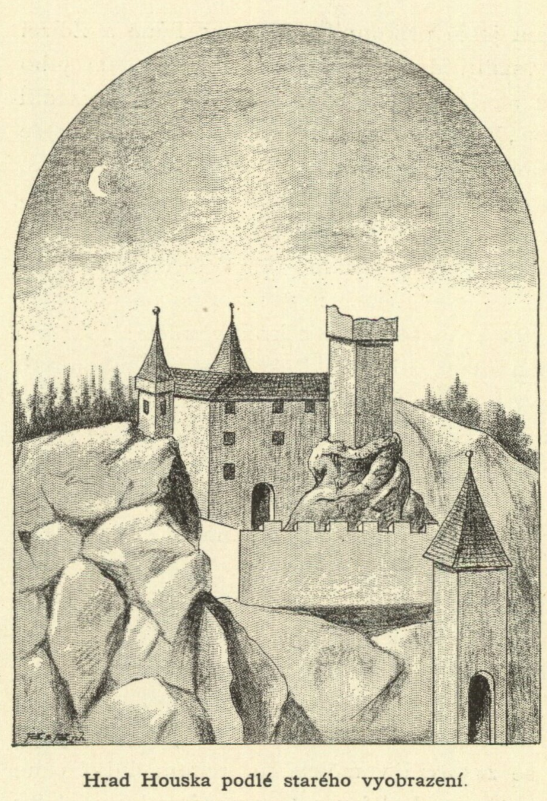
It came into the possession of a German noble family, the Hohenlohe family, in 1897; in 1918, it went to a Hungarian noble family, the Andrássy family; and then, in 1924, it was purchased by Czech industrialist and politician Josef Šimonek. Šimonek oversaw further reconstruction, some of which restored the castle’s Gothic roots; his family used it as a summer residence until 1939.
Guess what happened in 1939?
You don’t need to guess, do you? You already know: The Second World War happened, at which point the castle was appropriated by Axis forces. Not great!
After the war, though, it was happily put to other, better uses. Since 1950, for instance, it has housed the archives of the Czech National Library; it became a protected landmark in 1958; in 1974, it served as the recording location for a number of tracks on avant-garde musical group the Plastic People Of The Universe’s 1978 album Egon Bondy’s Happy Hearts Club Banned; and then, in the early 1990s, it was returned to the descendants of Josef Šimonek, who fully restored Houska Castle. It’s now open to visitors April through October each year.
The Gateway To Hell And Beyond: The Many Legends Of Houska Castle
But what of the legends? Why is Houska Castle often referred to as haunted, or cursed, or any of the other characteristics that contribute to its eerie reputation?
Well.
Let’s talk about it, shall we?
The root of the most pervasive story stems from Houska Castle’s lack of basic necessities and remote location. Why build a castle without a kitchen or reliable access to water at all — but especially in the middle of nowhere, in a location of zero importance?
Maybe, as some like to answer those questions, because it wasn’t really meant to function as a building at all.
Maybe it was intended to act as a barrier.
A vestibule.
A gateway.
Maybe it was meant to keep something out… or something in.
The story usually goes something like this:
The cliffs on which Houska Castle would eventually be built were no ordinary cliffs. A deep, deep rift cleaved its way through those cliffs — a rift that went down so far, it seemed bottomless.
It wasn’t, though; the abyss did have a bottom — one that reached into the depths of hell itself.
And hell, of course, is not empty.
Hell is full of all manner of fiends and monstrosities.
And when they are presented with a way out — a crack in the walls of their prison — they will, of course, take it.
And so, from this rift — the Gateway to Hell, as it became known — flooded terror upon terror: Winged beings; creatures that appeared to be half human and half animal; ghosts; skeletons; a horse with no head; beasts that left trails of blood in their wake; and more. These terrors, it was said, stalked the lands upon their escape, decimating the local livestock and causing disaster after disaster for the people who lived there.
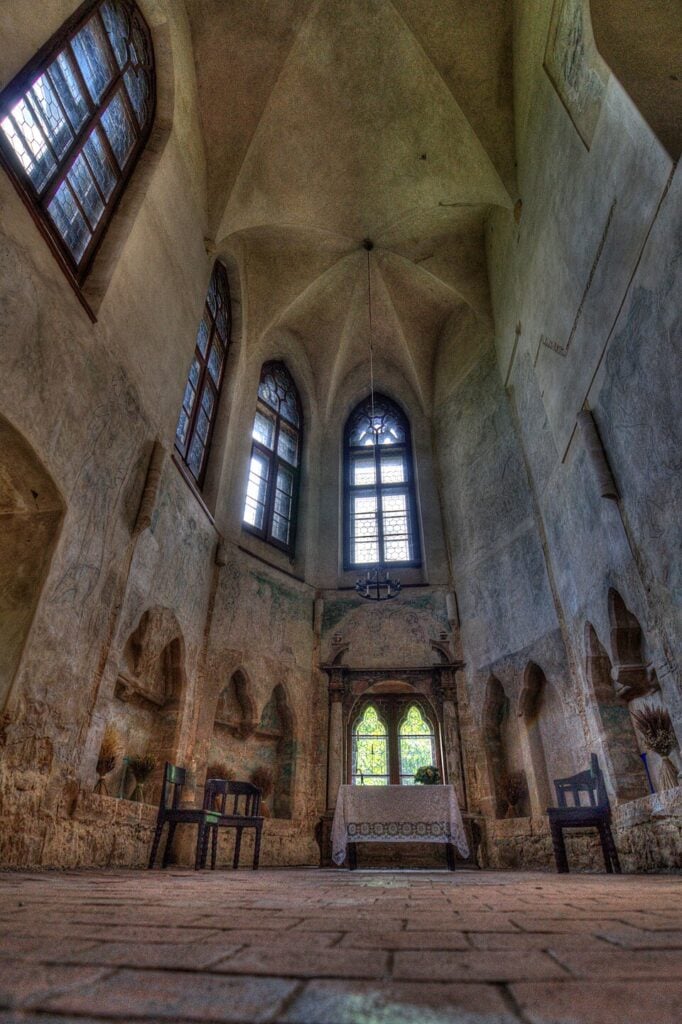
And so: A great fortress was built atop the cliffs — a structure that would secure the rift, cutting off the escape route presented through the so-called Gateway to Hell. This fortress was Castle Houska. As an extra layer of protection, the castle was designed such that its chapel was placed directly above the crack — for what demon would attempt passage through a place of religious significance? That, surely, was far more dangerous for any attempting escape than simply choosing to remain in hell, where they belonged.
This is why the castle had no kitchen and no running water, and why it was constructed where it was. It was never intended as a place for humans to spend any time at all, let alone live. It was intended only to act as a lock to the passage to hell beneath it.
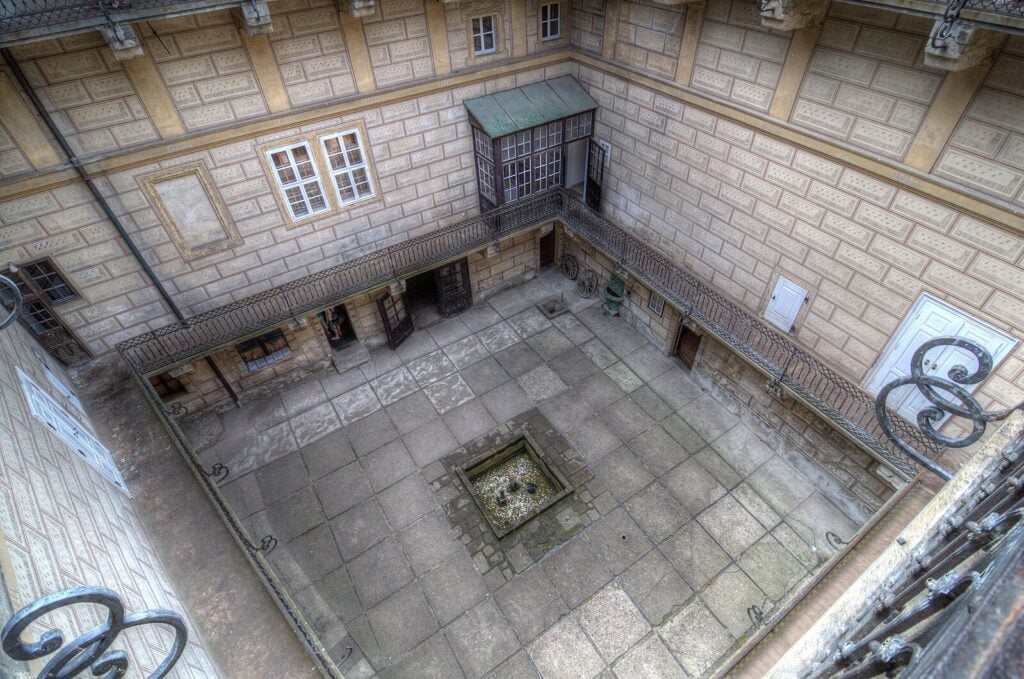
It’s said that, once — perhaps during the castle’s construction, although perhaps before it; accounts vary — prisoners who had been sentenced to death were offered a deal: Their crimes would be pardoned and they would be released on the condition that they allowed themselves to be lowered into the abyss at the end of a long, long rope to observe what actually existed down there and to report back to those on the surface. Only one condemned man agreed — for good reason:
Within moments of his being lowered into the darkness of the rift, he began screaming. He was hurriedly hauled back up to the surface — and when he remerged from the abyss, it became clear that he had been irrevocably changed. Frantic with fear, his hair gone completely white and apparently having aged several decades in mere minutes, he could only gibber about demons and creatures and fire and brimstone. He had, it seemed, seen into the very fires of hell itself.
No further attempts were made to see into the abyss.
The castle seemed to do what it was intended to — but its mysterious reputation doesn’t stop there.
During Houska Castle’s occupation by the Swedish army during the Thirty Years’ War, it is sometimes said, its occupants included not just the army, but also a sorcerer devoted to the practice of the darkest of magicks. His name, it is said, was Oronto.
Oronto is believed to have spent much of his time in pursuit of the discovery of the secrets of immortality — the study of which required experiments of the most horrific kind. His research, however, was in vain; when it was discovered what precisely he was doing inside the castle, it is said that two hunters breached the fortress’ walls, seeking Oronto as their prey. They dispatched him in his own laboratory, putting an end to his search for eternal life.
Oronto, however, is not the only one who is said to have performed terrible experiments within Houska Castle. Further experimentation is said to have been carried out within the castle walls during its occupation under the SS in the Second World War — although whether the experimentation was scientific or occultic is unclear. Either way, though, anything considered “experimental” that occurred in Houska Castle then would almost certainly have fallen squarely into the category of unethical experimentation. We can be reasonably certain about this, at least, because, well… history.
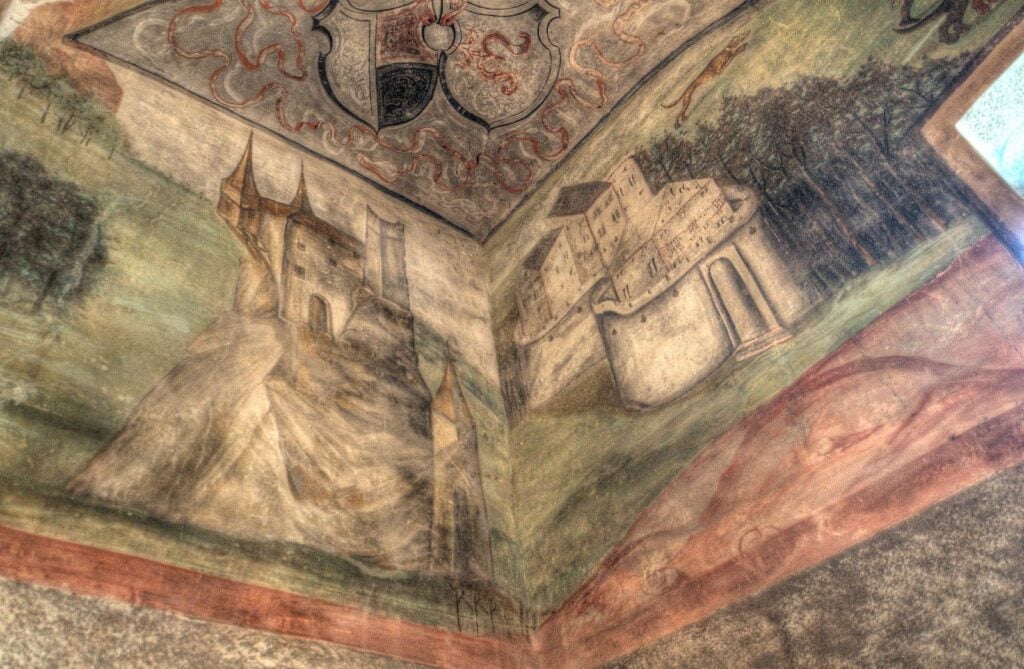
Other stories that cling to Houska Castle: The ghost of a shadowy monk clad in black guards the chapel, and, thus, the Gateway to Hell. Cars parked near the castle won’t start. Screams can sometimes be heard from beneath the castle — or, more accurately, beneath the chapel. Screams, and scratching sounds. As if something were furious, enraged… and still trying to escape after all this time.
Fact vs. Fiction: Separating Castle Houska’s History From Its Folklore
Of course, none of these stories can be verified in any meaningful way.
Let’s start with the whole Gateway to Hell thing: The source of these stories — the tales of the rift in the cliffs and the presentation of Houska Castle as a method of sealing it off — is Bohemian chronicler Václav Hájek’s 1541 volume Czech Chronicle, also known as Bohemian Chronicle or simply Hájek’s Chronicle. Although this volume was regarded as one of the most comprehensive histories of Bohemia for some centuries, it was also reassessed later and deemed… let’s call it deceptively colorful. Enlightenment era historian Gelasius Dobner’s 18th century work Wenceslai Hagek a Liboczan Annales Bohemorum basically tore the Czech Chronicle apart, demonstrating it to be entirely too fictional to be a reliable source of history.
Although it’s only tangentially relevant to our subject matter here, University of Ostrava linguist Jaroslav David’s 2009 article “Etymology in the Middle Ages Czech Chronicles: from Cosmas to Hájek” (which is still a great read if you’re interested in folk etymology, particularly of place names!) puts Hájek and his work firmly in perspective. David describes Hájek himself as either “the most deceitful chronicler or just a chronicler with [an] overactive imagination” — painting the chronicle as, at best, full of fanciful thoughts, and at worst, deliberately misleading.
David further points out that Hájek’s etymological work also “presents a lot of etymologies of non-existent places,” as well as “people whose existence has no historical evidence” — that is, Hájek straight-up just made stuff up. He wasn’t alone in this practice; chroniclers at the time were generally in the habit of creatively filling in the blanks they lacked any actual documentation for — but Hájek did so particularly colorfully, so although his work is useful for some things (it’s still a primary source, after all), it’s, again, not a reliable source for factual history.
As such, the stories in the Czech Chronicle about the Gateway to Hell? They’re just that — stories.
As for everything that came after that? Similarly, there’s little to no documentation of any of it. Oronto, for example? There’s nothing documenting this supposed sorcerer of the dark arts, so that, too, is likely just a story.
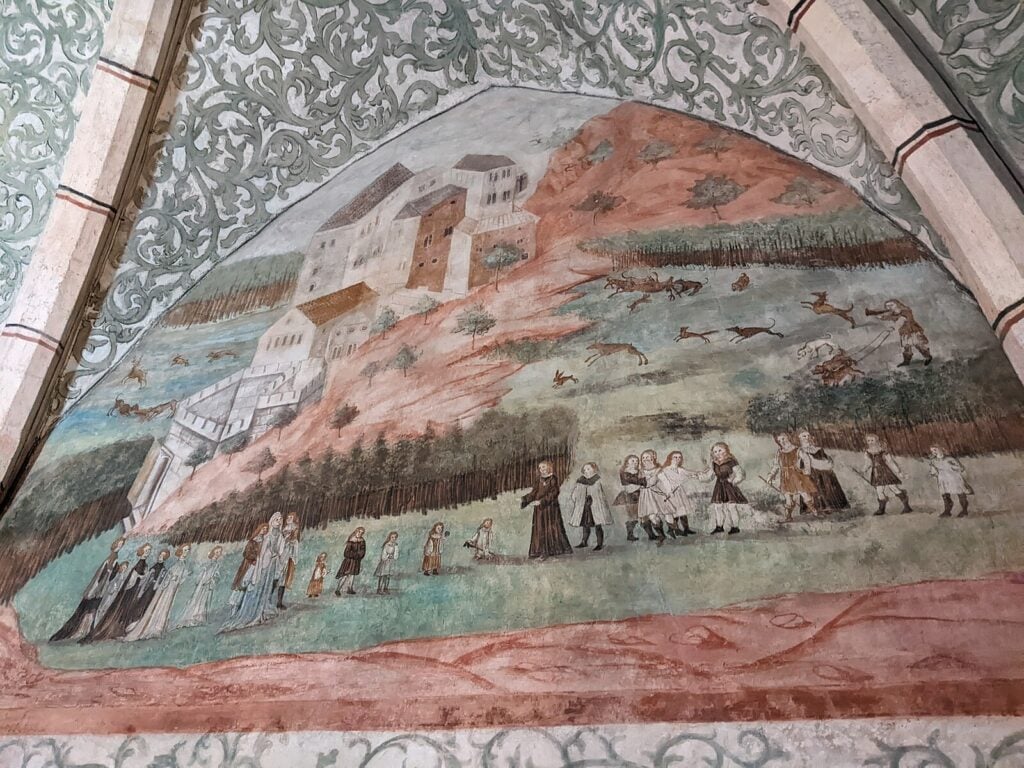
Interestingly — and perhaps, most horrifyingly — the stories that are the most convincing in terms of whether they could actually have happened or not are the things said to have taken place at Houska Castle during the Second World War. Unethical human experimentation carried out by the Third Reich is well-documented; meanwhile, the regime’s obsession with the occult is somewhat more complex than it’s often portrayed as, but was also still something of A Thing.
Alas, no documentation of what actually occurred during the period that Houska Castle was under SS control has survived, so these stories, too, could remain simply stories — and, in all likelihood, they probably are stories, just like all the others. They’re perhaps the most frightening of all the tales, though, given that they’re so firmly rooted in things that actually did happen — and that were perpetrated by humans, not demons or monsters or any sort of supernatural boogeyman.
The Mysteries That Remain: Castle Houska In The Present
Even if the stories themselves probably aren’t true, there’s still plenty to perplex and fascinate about Houska Castle. Many of the windows, for instance, aren’t windows at all; they’re just facades, plastered atop solid walls. Many of its defensive features were also built facing inward, rather than outward, which… doesn’t make a whole lot of sense.
Then there are the frescoes in the chapel. Many of them depict the Archangel Michael, to whom the chapel is dedicated; in the frescoes, he’s shown facing off with a dragon, as well as weighing souls at the Last Judgement. But there’s also, oddly, a fresco featuring a female-presenting centaur portrayed as an archer — a left-handed one.
This is unusual for a few reasons, the most obvious is perhaps the use of decidedly pagan imagery in a piece of Christian art. Even stranger, though, is her left-handedness: It’s been pointed out that left-handedness has historically (and incorrectly, but, hey, these frescoes are old) been depicted as a sign of evil. You’re familiar with the Latin words for right and left, yes? Dexter for right, from which we get words like dexterity; and sinister for left, from which we get… well, words like the adjective sinister. Some have commented that this left-handed centaur might represent the creatures that the construction of the castle was (allegedly) meant to seal in.
Is there really a Gateway to Hell beneath Houska Castle? Probably not…
…But you don’t have to take my word for it.
You can always go take a look for yourself.
Just… don’t say I didn’t warn you.
***
Follow The Ghost In My Machine on Bluesky @GhostMachine13.bsky.social, Twitter @GhostMachine13, and Facebook @TheGhostInMyMachine. And for more games, don’t forget to check out Dangerous Games To Play In The Dark, available now from Chronicle Books!
[Photos via MartinVeselka (1, 7), ŠJů, public domain, Lukáš Kalista (4, 5, 6)/Wikimedia Commons, available under CC BY-SA 4.0 and CC BY-SA 3.0 Creative Commons licenses]
.jpg)
.jpg)


Leave a Reply