Previously: Ted The Caver’s Mystery Cave.
Type: PE (Preternatural Entity).
Period/location of origin: Unknown, Ireland. Written mention of subject, known commonly as the dullahan, although more accurately termed the dúlachán in the original Irish, may be found dating back to 1802; proper documentation, however, does not occur until slightly later in the 19th century, notably in the second volume of Thomas Crofton Croker’s Fairy Legends and Traditions of the South of Ireland, published between 1825 and 1828.

It is of some debate whether subject is part of a longer oral tradition. Due to the nature of such traditions, documentation is, naturally, lacking.
[Like what you read? Check out Dangerous Games To Play In The Dark, available from Chronicle Books now!]
Appearance: Subject typically appears as a classic “headless horseman,” although may sometimes appear more as what may be described as a “headless coachman.” The dullahan is typically clad all in black; its horse, too, is typically black.
As the phrase “headless horseman” may imply, subject lacks a head — or, more specifically, lacks a head where the head would typically be located, i.e. atop subject’s neck. Subject may, however, carry its dislocated head in its own hands, or inside a pocket or saddle bag. Occasionally, the head may float near to subject’s body by a mechanism not well understood.
In cases where the dislocated head is present, it typically appears in a somewhat advanced state of decay; its complexion may be described as resembling moldy cheese, implying a spongy, pocked, crumbling appearance.
In instances where subject appears not simply as a horseman, but as coachman, the dullahan does not ride astride a single horse, but rather sits at the front of a coach drawn by as many as six horses. Subject remains headless and clad in black; the horses, however — also still black — are additionally described as headless themselves.
This coach — the coach-a-bower, or cóiste bodhar — too, is black; further details sometimes — but not always — reported include the coach’s wheels comprising spokes of human thigh bones and axels of human spines, with two human skulls forming lanterns hung from the coach to light its way. In at least one account, the coach is also described as being mounted upon a coffin.
Subject may or may not carry a whip; if it does, the whip may or may not comprise a human spine.
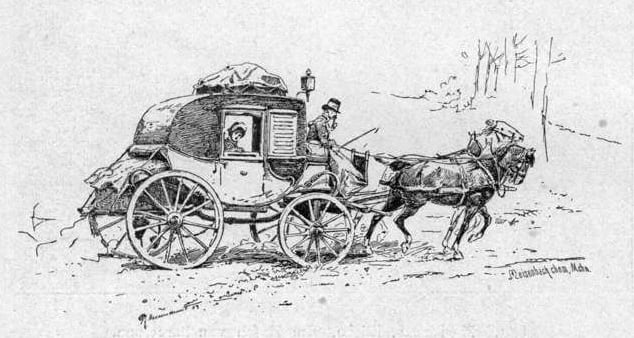
Of note: Although the dullahan is often male-presenting, it is not always as such. Subject may occasionally appear female-presenting, depending on the account. Please note that a female-presenting dullahan is distinct from banshee, although the two may appear near to each other, or even in league with each other.
Modus operandi: Subject’s clearest function is as an omen of death. In these instances, subject appears on roads in areas which, later, it will be discovered someone — determined at that time to have been subject’s target — has passed on. These appearances generally occur at or around midnight, and may be observed by witnesses as well as targets.
It should be noted that subject is not responsible for the passing of targets; subject merely makes clear that the passing is upon them. In the event that the dullahan drives a coach as opposed to simply riding a horse, subject may also potentially be a mode of transportation for target to move from one world to the next.
Subject may, upon being sighted by witnesses when subject did not intend to be seen, strike out witnesses’ eyes in retribution. It may or may not accomplish this act using its whip.
Subject may also, upon being sighted by witnesses who open the doors of their homes to investigate the commotion caused by subject as it thunders past, fling basins of blood at witnesses as it goes.
However, reports vary as to subject’s modus operandi.
In some accounts, subject bears similarities to the entities known as phantom hitchhikers; in these cases, subject does not have a horse of its own, and may instead accept a ride offered by a passing target.
In other accounts, subject is simply looking for someone to race against, purely for its own enjoyment. Entities deserve to have a little fun every now and again, just like everyone else, after all.
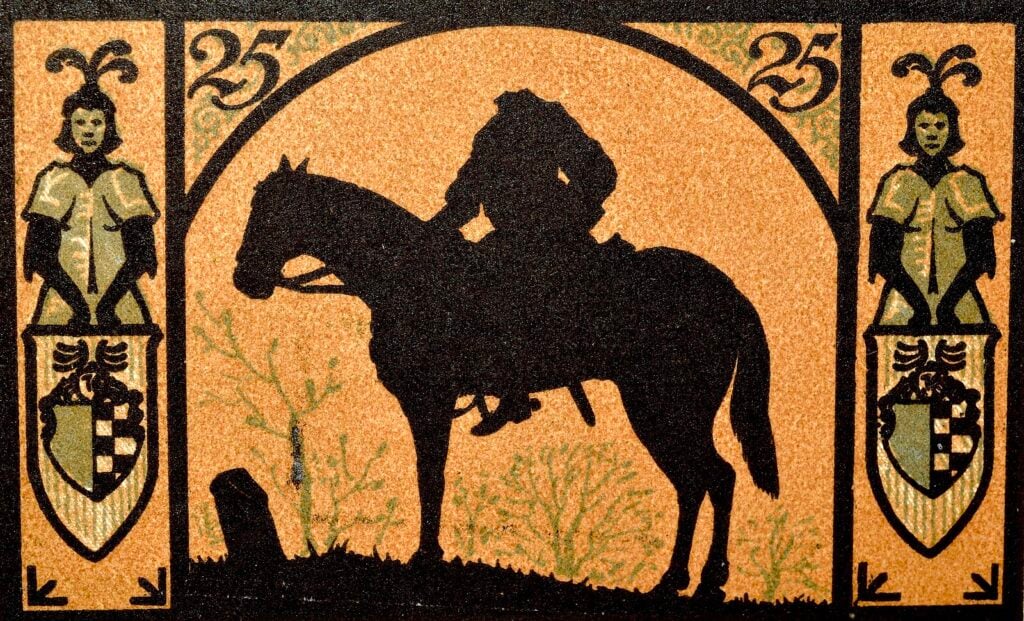
Containment: One suggested containment method involves presenting gold to subject — not to buy subject off, but because subject may be warded off or repelled by the metal. This containment method is somewhat suspect, however, and may not reliably work. (See: Additional notes.)
Otherwise, there is not precisely a way to contain subject, if it is operating in its capacity as an omen of death; once death has decided it is your time, there is, after all, no containing it.
Should witnesses wish to protect their eyes or prevent themselves from having basins of blood flung upon them, it would be wise simply to close your eyes and/or stay indoors.
Should subject be encountered as a phantom hitchhiker, it may be advisable not to offer them a ride.
Should subject be encountered as wishing to find an opponent to race… well, the choice here is yours. If you choose to race, the prize for winning may be great — although so might be the cost of losing.
No matter how subject is encountered, or in what form, never forget what the dullahan ultimately represents: The speedy and inevitable approach of death.
Additional notes: As previously noted, the earliest known piece of substantial written documentation regarding subject occurs in the second volume of Fairy Legends and Traditions of the South of Ireland, published by Thomas Crofton Croker (although the authorship of this collection is also known to have been somewhat dubious) between 1825 and 1828. The second volume of this collection of tales features a chapter centered entirely on the dullahan, and includes four stories and a ballad, along with commentary from Croker about the legend and other related legends around the world.
William Butler Yeats’ volume Fairy and Folk Tales of the Irish Peasantry also contains mention of the dullahan, this time explicitly linking it with the banshee, also known as an omen of ill fortune or death. Yeats’ version also specificially positions the dullahan as a headless coachman driving a coach-a-bower, rather than a simple headless horseman, although details from Croker’s version are also cited (namely, the basin of blood).
Before these two volumes, however, documentation is lacking; as such, Croker’s and Yeats’ accounts form the basis of most further examinations of subject,
Of subject’s name itself: One possible etymology for the terms “dullahan,” “dúlachán,” “dubhlachan,” and “durrachan” —all terms by which subject might be referred — includes roots stemming from “Dorr, or Durr, anger, or Durrach, malicious, fierce, etc.,” per 18th-19th century scholar and lexicographer Edward O’Reilly via Thomas Crofton Croker. O’Reilly further noted that the dullahan generally “signifies a dark, sullen person.” However, as Croker also commented that he found O’Reilly’s etymology questionable, preferring “dubh,” or “black,” as the key root in play — which, given that subject is usually described as being dressed all in black and riding a black horse or driving a black carriage, would make a certain amount of sense.
Connections have been drawn between the Celtic deity Crom Dubh and subject, as well as between the type of fairy called, in Irish, gan ceann (in English, “without a head”) and subject; however, as others, including writer Doris V. Sutherland and I. E. Kneverday, have noted, connections such as these are typically not well-sourced (or sourced at all), and subsequently should be considered questionable.
In the case of the alleged Crom Dubh connection, for instance, Sutherland comments that although the idea is “colorful,” it is more “an exercise in creative writing than serious scholarship”; or, as Sutherland puts it succinctly, “This is a good premise for a horror story, but as a piece of folklore scholarship it’s extremely dubious.”
Meanwhile, in the case of the gan ceann, this researcher has found the term to be frequently conflated with that of the dullahan, despite them being clearly separate entities. The idea of gold being a possible containment method, for instance, seems to be drawn from reports of the gan ceann, and added as an embellishment to stories of the dullahan later on.
Writer I. E. Kneverday further comments that, as a proper noun, Gan-Ceann is specifically “the personification of day-dreaming,” and known not for indicating the imminent arrival of death, but as a being whose main function is “filling minds with fluff.” With this in mind, therefore, Kneverday notes that it quickly “becomes clear that the meaning of his name, ‘without a head,’ is a metaphorical reference, not a literal one.”
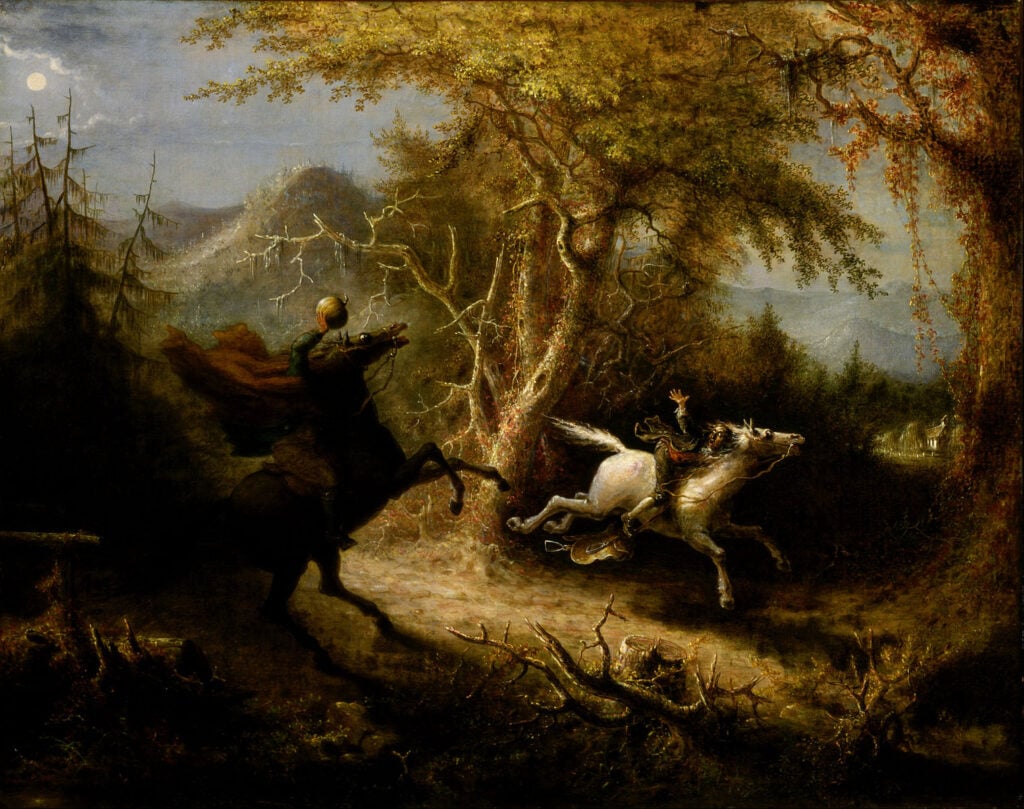
Further connections have been drawn between subject and the headless horseman described in the Washington Irving short story “The Legend Of Sleepy Hollow,” originally published in 1820 and included in the collection of short works gathered in The Sketch Book of Geoffrey Crayon, Gent. Scholars and researchers are divided on whether Irving would have known of the Irish dullahan; some, citing Irving’s Anglo-Scottish background, argue he would have, although others, citing the 1825–1828 publication dates of Thomas Crofton Croker’s Fairy Legends and Traditions of the South of Ireland, argue that he would not.
It is perhaps worth noting that Irving’s horseman is the ghost of a Hessian trooper — that is, he is German, not Irish — and also that headless horseman legends do of course exist in other countries, cultures, and traditions; as such, there are many possible sources of inspiration Irving may have drawn on in the creation of the specter at the center of “The Legend Of Sleepy Hollow.”
Or, to put it simply: A headless horseman may be a dullahan, but does not necessarily have to be a dullahan.
…Even if most headless horsemen are perhaps best avoided.
Recommendation: You can’t outrun death.
Best not to try.
Resources:
Fairy Legends and Traditions of the South of Ireland by Thomas Crofton Croker.
Fairy and Folk Tales of the Irish Peasantry by William Butler Yeats.
“How Tales Of The Headless Horseman Came From Celtic Mythology” by Jessica Traynor at the Irish Times.
“Daoine Sidhe: Celtic Superstitions Of Death Within Irish Fairy Tales Featuring The Dullahan And Banshee” by Marissa Harris.
“The First Group Of British Folklorists” by Richard M. Dorson in the Journal Of American Folklore.
“Armchair Folklore: Yeats and the Textual Sources of ‘Fairy and Folk Tales of the Irish Peasantry'” by F. Kinahan in the Proceedings of the Royal Irish Academy: Archaeology, Culture, History, Literature.
Monstrum, episode “The Original Headless Horseman” at YouTube.
“Did The Dullahan, The Irish Headless Horseman, Really Inspire ‘The Legend Of Sleepy Hollow?'” by I. E. Kneverday.
“The History Of The Dullahan In Irish Folklore” by Doris V. Sutherland.
“More On The Dullahan In Irish Folklore” by Doris V. Sutherland.
“The Legend Of Sleepy Hollow” by Washington Irving.
***
Follow The Ghost In My Machine on Bluesky @GhostMachine13.bsky.social, Twitter @GhostMachine13, and Facebook @TheGhostInMyMachine. And for more games, don’t forget to check out Dangerous Games To Play In The Dark, available now from Chronicle Books!
[Photos via Wikimedia Commons (1, 2, 3, 4), available in the public domain]
Fairy_Legends_p0239-dullahan.jpg)

.jpg)
